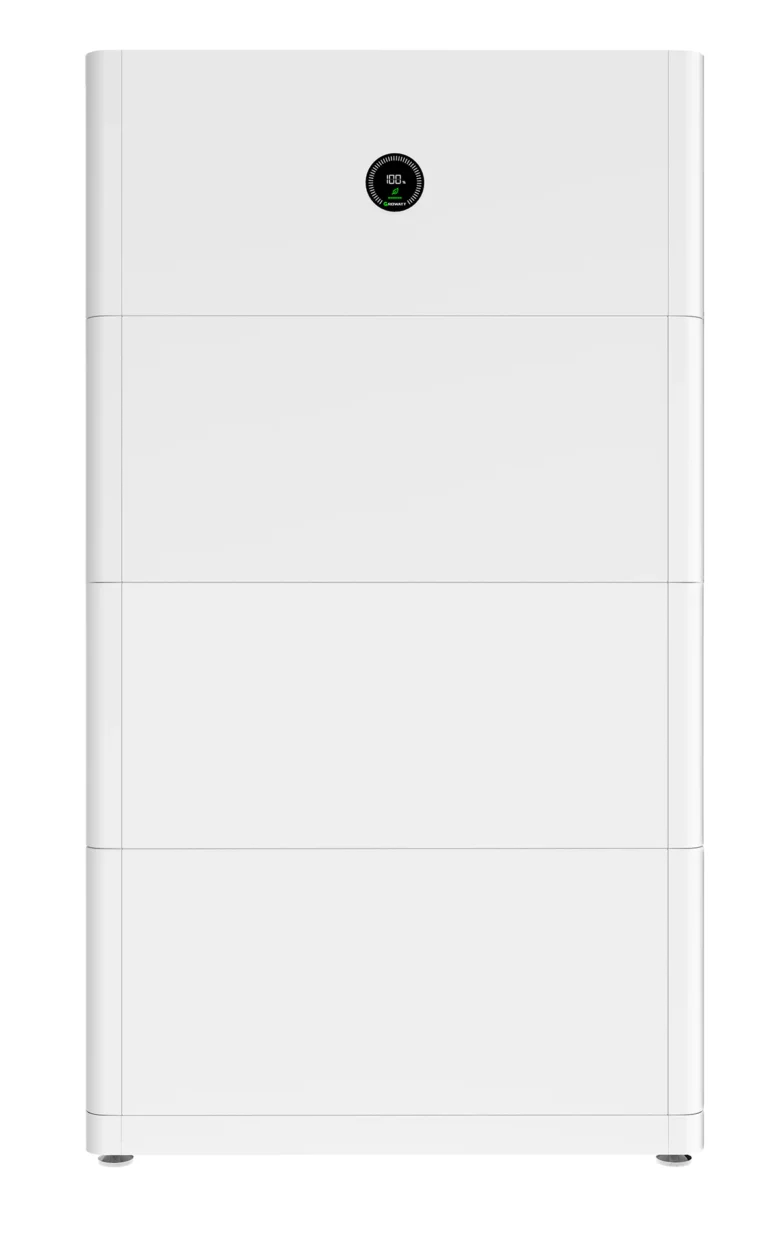
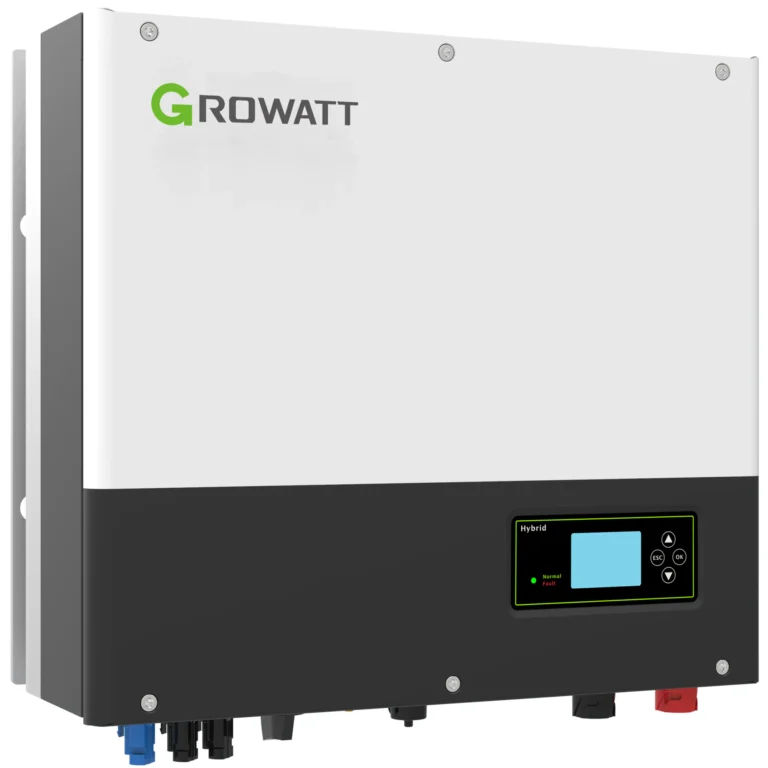
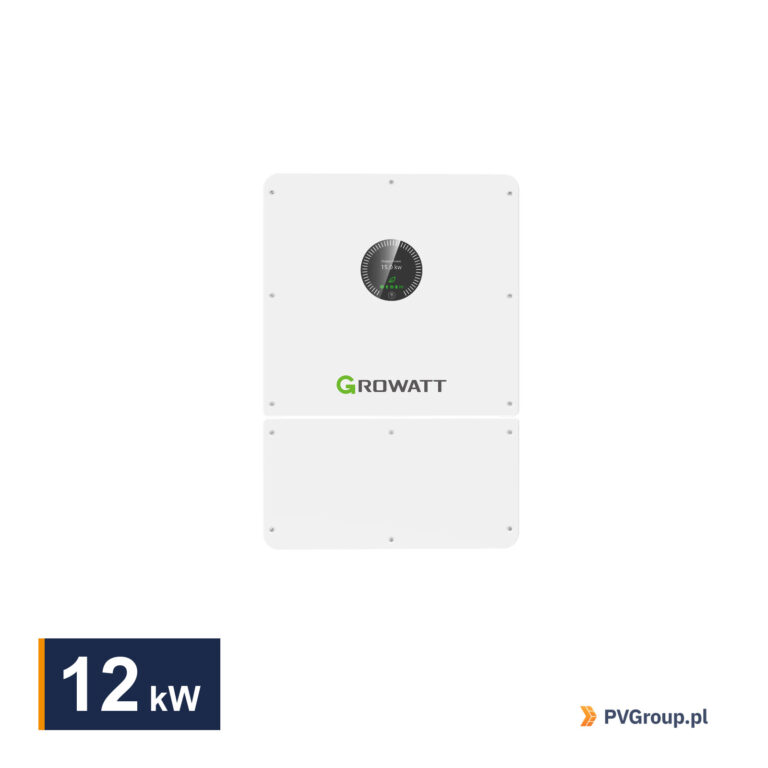
"I already have photovoltaics on an inverter Growatt — Can I add a battery? This is one of the most common questions we get, and it rarely has a binary answer. Inverter Storage Growatt You can only add it without replacing the device if your model is a hybrid or battery-ready unit—and that's determined by the nameplate, not the request. This guide walks you through model verification, a complete shopping list for battery-ready units, and a replacement scenario where a battery track simply doesn't exist.
Step One: Check if your model will even accept the battery
Inverter families Growatt are divided into three groups in this matter. Hybrids — as SPH — have a factory-installed battery circuit and were designed to work with the warehouse from day one. Battery-ready units — MIN TL-XH and TL-XH2, MOD TL3-XH (in BP and HU variants) and MID KTL3-XH — they work today like a regular grid inverter, but the compatibility table allows for their expansion with a battery after purchasing the appropriate modules. Finally, classic grid inverters, such as the MIC or MAX, they have no battery track at all - storage to the inverter Growatt from this group means a change in architecture: replacement with a hybrid or a system added on the AC side.
You can read the model from the nameplate or monitoring app, and it is this model—down to the suffix—that determines everything. The suffix "XH" in MIN 5000 TL-XH This is a different shopping list than "XH2", and the BP version of the MOD has a built-in backup, which the base variant does not. Before you count the kilowatt-hours, copy the full model number down to the letter - half of the offer misunderstandings start with "I have a MOD", without the rest of the name.
Inverter storage Growatt battery-ready - what do you need to buy?
Inverter storage Growatt battery-ready class is always a shopping list of three items - a battery of the appropriate class, a module BMS appropriate for the inverter + battery pair and possibly the emergency power supply box - and its content is determined by the compatibility table:
| Inverter owned | Battery | Module BMS | Emergency power supply |
|---|---|---|---|
| MIN 2500–6000 TL-XH / TL-XH2 | ARK 2.5H-A2 (tower 7,68–25,6 kWh) | BDC 95045-A1 | SYN 50-XH-10 |
| MIN 2500–6000 TL-XH / TL-XH2 | APX HV (modules of 5 kWh) | APX55027-P0 | SYN 50-XH-10 |
| MOD 3000–10K TL3-XH BP | APX 5.0P-B1 | APX 98034-P2 | built-in (BP) |
| MOD 3000TL3-XH HU – 15KTL3-HU | APX Gen 2.0 (5.0M-B3 + 5.0P-B3) | Master module - integrated | SYN integrated |
| MID 17–30KTL3-XH | APX 5.0P-B1 | APX 98034-P2 | EU SYN-100-XH-30 |
| SPH TL3 BH-UP (3-phase hybrid) | ARK 2.5H-A2 (7,68–25,6 kWh) | HVC 60050-C2 | |
| SPH 8000/10000TL-HU (1-phase hybrid) | AXE 5.0L-C1 / ARK 2.5L-A2 / HOPE 5.0L-B1 | BMS in the battery |
Two things in this table are most often confused. First, the same MIN TL-XH uses a different module BMS depending on the selected battery family - BDC 95045-A1 for ARK tower, APX55027-P0 for APX; we break it down in detail in the pairing guide BMSSecondly, the box SYN It's not decorative: without it, the complex system operates on a battery, but it won't support the house in the event of a power outage. If a customer says, "I want power when my neighbors go out," SYN it must be included in the offer from the beginning - adding it after the first network failure means a second visit and second arrangements.
How much capacity will the storage fit into the inverter? Growatt?
The fork is derived from the battery family. Tower ARK The 2.5H-A2 scales according to the datasheet from 3 to 10 modules of 2,56 kWh, i.e. from 7,68 to 25,6 kWh — expansion by one module, without wiring between packages. Family APX grows in modules of 5 kWh, in configurations depending on the inverter line. In home practice, the most common retrofit scenario is to start with a minimal tower and add modules after the season, when the customer sees real consumption profiles — modular architecture Growatt is designed for this, provided that one generation of hardware is kept within the tower.
Inverter storage Growatt It is not only the capacity that is chosen that counts: the power that the bank will give off and accept. ARK HV operates nominally at constant current, and its power increases with the number of modules—a small tower with a large inverter will be a charging bottleneck. For exact values for your planned configuration, check the battery datasheet and our knowledge base article on energy storage. Growatt, where we have compiled the limits of all families.
When Retrofit Makes Sense - Three House Profiles
The first profile is a house with a large production surplus sent to the grid on unfavorable settlement conditions - here the storage for the inverter Growatt It works for self-consumption: the surplus from midday returns to home consumers in the evening instead of to the grid. The second profile is a zone or dynamic tariff: a bank charged during cheap hours and discharged during expensive ones earns on the price difference, while units with time schedules do this automatically. The third profile is for areas with frequent grid outages—here, the value is in maintaining power, but only in a configuration with a box. SYN or with a hybrid that has an emergency track.
Honestly, retrofitting doesn't work everywhere. A house with a flat, nightly consumption profile and a small PV installation will rarely fill the bank, and the price difference in the tariff must be real to make money. That's why we start the upgrade discussion with an annual production and consumption graph from monitoring—the data is already in the app; all you have to do is glance at it before you add anything worth several thousand to your cart.
What does the extension itself look like - assembly day
With a battery-ready unit, expansion is predictable: placing the tower or modules with the required spacing, mounting the module BMS according to the pair from the table, power and communication wiring, connection of the box SYN with the separation of the backup circuits, an inverter firmware update, operating mode settings, and a final test. The acceptance criterion is always the same: the inverter displays the bank's charge status and responds to changes in it. Details of communication and typical errors are described in the pairing guide. BMS.
The time of work depends on the facility, so we do not promise hours - but the scale is significantly smaller than when building an installation from scratch: we do not touch the panels or the DC side of the generator, and the storage up to the inverter Growatt It plugs into the existing architecture. The most time-consuming part isn't the electrician's work, but the logistics: carrying the modules, each weighing several dozen kilograms, to the customer's "ideal spot" behind the third basement door.
Grid inverter without battery circuit – what then?
For purely grid-tied units, the honest answer is: there is no such thing as an "in-situ" expansion. There are two options. The first is to replace the inverter with a hybrid that matches the installation's power and add storage from its compatibility matrix. The old inverter usually finds a second life on the secondary market, leaving the PV installation untouched. The second is an AC-coupled system, meaning a separate storage inverter added to the AC side; the portfolio Growatt The AC couple function is offered by selected hybrids on the GEN port, with strict compliance requirements described in the manuals. This solution is designed individually – with an advisor and documentation, not from a shopping cart.
Which path should you choose? If your inverter is nearing the end of its warranty or is undersized for your current needs, replacing it with a hybrid system will keep your system in order for years to come. With a new, well-selected grid-tie inverter, the calculations can be reversed. In both cases, start with a consumption estimate, not the advertised capacity.
From the installer's practice
- From practice: before you offer anything, ask the customer for a photo of the nameplate and a screenshot from the monitoring application.MIN 5000″ without a suffix is not enough – and the customer almost never knows the suffix by heart.
- From practice: in the retrofit valuation, show two lines immediately - from SYNWith and without - with a single sentence explanation of what each can do in the event of a power outage. The customer chooses consciously and doesn't return with a grudge after the first power outage.
- Practical advice: plan your tower's installation location with room for expansion by a module or two. Moving a complete tower in a year will cost more than moving a 30-centimeter wall today.
- From practice: when expanding an older installation, check the inverter firmware version before ordering batteries - an update is a condition for proper cooperation with the warehouse and it is better to plan it than to discover it on the construction site.
Frequently asked questions (FAQ)
I have a MIC 3300 TL-X. Can I add a battery to it?
Not directly - it's a grid-tied inverter without a battery circuit. Real options include replacing it with a hybrid (e.g. single-phase class MIN TL-XH with turret ARK or modules APX) or individually designed AC-coupled system. Inverter storage Growatt this class always goes through an architecture change.
What is the difference between battery-ready and hybrid?
The hybrid comes with a complete battery circuit as standard. A battery-ready unit requires the purchase of an additional module. BMS (and often boxes too SYN), but it allows you to spread the investment: an inverter today, a storage unit when the budget and tariff make sense. Both paths end with the same system—they differ in the order of purchases.
Can I start with a small bank and expand in a year?
Yes, that's the greatest strength of modular architecture. The tower ARK accepts subsequent modules within the range provided by the card, and the warehouse to the inverter Growatt Post-season expansion is based on actual usage data rather than the vendor's forecast. Two conditions: the physical space left during initial installation and the same generation of modules within the tower. Purchasing an older version package triggers the limitations we described in the article about the ARK series.
Does the expansion require formal notifications?
Adding storage changes the installation configuration and, depending on the operator and capacity, may require an updated application. Procedures vary between DSOs – confirm requirements with your operator before installation; a licensed installer handles the formalities.
Warehouse expansion checklist
- Full inverter model designation taken from the nameplate (with suffix).
- Model confirmed in the compatibility table as hybrid or battery-ready.
- A shopping list of three items: a battery of the right class, a module BMS from steam, SYN if there is to be emergency power supply.
- Starting capacity matched to the consumption profile, with room for tower expansion.
- Inverter firmware version checked before ordering.
- OSD formalities verified for changed configuration.
- Configuration verified in the configurator before placing the order.
The quickest way to check if your model will accept a battery and which one: inverter and battery configurator GrowattFrom the retrofit offer: battery pack APX 5 kWh for MIN-XH inverters and — for larger three-phase installations — GROWATT MID 17KTL3-XH; full overview in the category Energy storageCatalog cards and instructions are published Growatt.