Inverter error codes WIT are divided into warnings with numbering from 200 and above and errors with numbering from 300, and the first digit after the hundred indicates the fault area: 2xx is the modules side, 3xx network, 4xx inside the device, 5xx battery and BMS, 6xx island operation. Knowing this distinction allows you to distinguish between an installation fault and a hardware failure before submitting a service request. Below, we've collected inverter error codes. WIT from the manufacturer's instructions, grouped thematically, along with what can be actually checked on the site.
How to read inverter error codes WIT
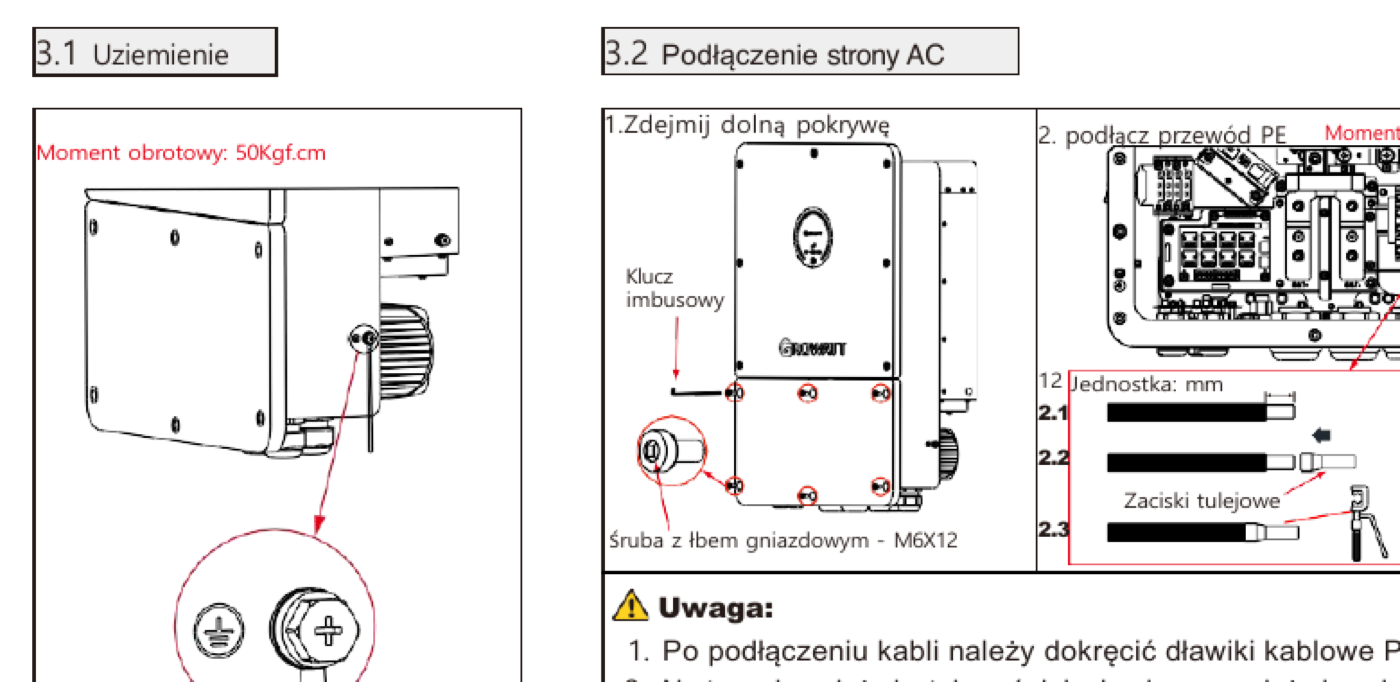
Inverter error codes WIT are divided into two categories. A warning indicates a condition in which the inverter continues to operate or resumes operation automatically after the cause is removed. A fault stops operation until the fault is removed and the alarm is cleared.
The numbering is consistent across both categories, so Warning 501 and Error 501 cover the same area, albeit with different severity levels. In practice, most service calls can be resolved based solely on the number and meter reading, without a visit to the manufacturer's service center.
| Range | Distance | Typical cause |
|---|---|---|
| 200-299 | PV and DC side | string, insulation, fuse, input voltage |
| 300-399 | AC network and measurement | no network, voltage, frequency, counter, phase sequence |
| 400-499 | inside the inverter | relay, temperature, IGBT, memory, AFCI |
| 500-599 | battery i BMS | communication, voltage, current, cell temperature |
| 600-699 | island work | output short circuit, overload, bus voltage |
Inverter error codes WIT PV side - range 200
Inverter error codes WIT from this group concern modules, DC cabling and protection on the photovoltaic generator side.
| Code | Meaning | Co spravdzić |
|---|---|---|
| Warning 200 | string fault | voltage and current of each string separately, comparison with the others |
| Warning 201 | string PV or fast discharge PID | insulation resistance, moisture in MC4 connectors |
| Warning 203 | PV1 or PV2 short circuit | damage to the wire insulation, abrasion on the edge of the sheet metal |
| Warning 208 | blown DC fuse | fuse in DC box, cause of string overload |
| Warning 209 | DC input voltage | string length, tension on a cool morning and in the heat |
| Warning 219-221 | string PV, string current, PID function | module dirt, shading, differences between strings |
Warnings in this group usually point to the installation, not the inverter. Before calling for service, measure each string individually with the connectors disconnected—a voltage difference of several dozen volts between strings of the same length immediately indicates the problem.
Inverter error codes WIT regarding AC networks - range 300
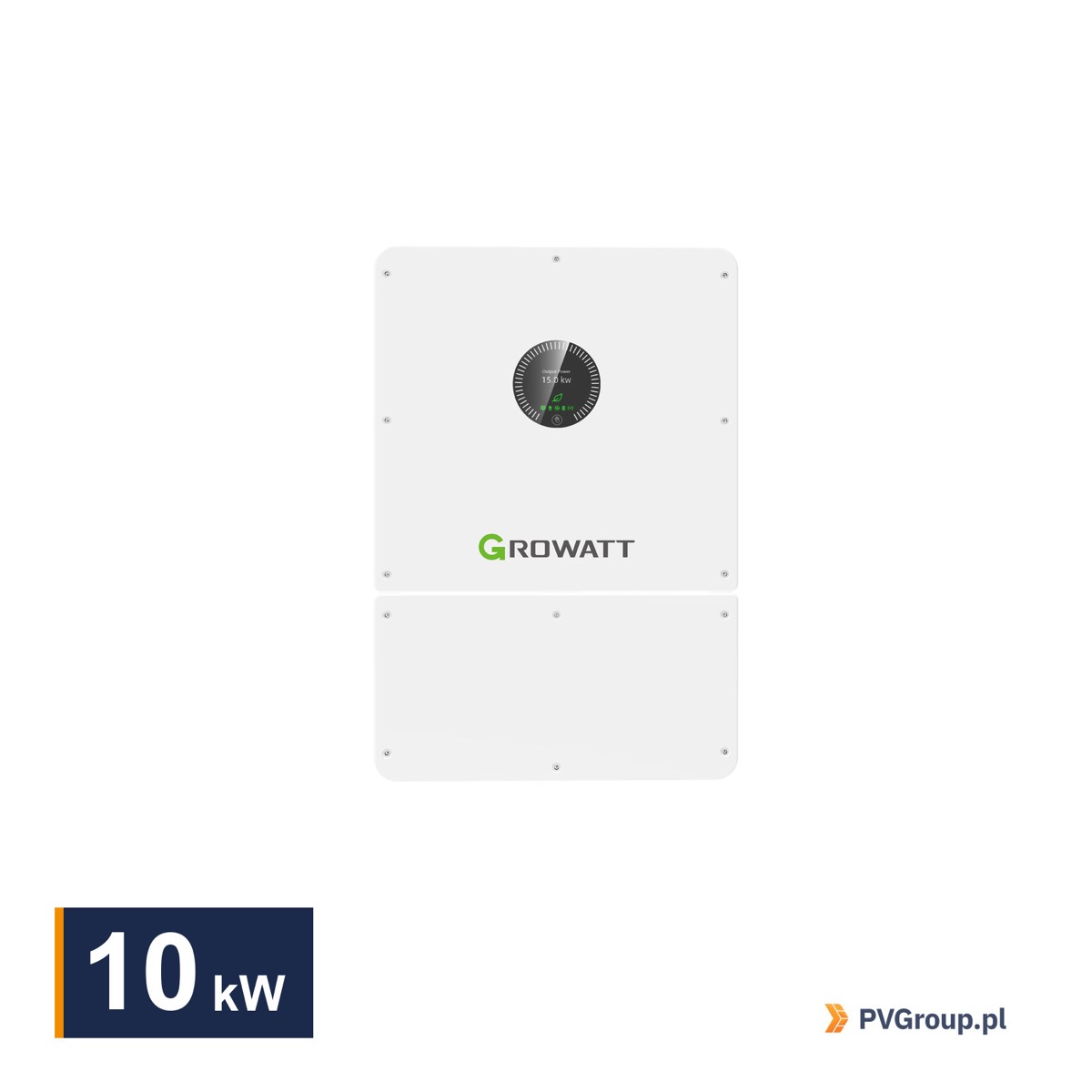
The second group includes network parameters and the measurement system needed for Load First mode and for export limitation.
| Code | Meaning | Co spravdzić |
|---|---|---|
| Warning 300 | no network | main protection, phase loss, connection status |
| Warning 301 | mains voltage out of range | voltage measurement at terminals, drops on AC wire |
| Warning 302 | network frequency out of range | network stability, generator operation nearby |
| Warning 303 | overload | sum of loads to rated power |
| Warning 308 | meter disconnected | RS485 communication with the meter, addressing, termination |
| Warning 309 | meter connected backwards | direction of current transformers, arrow markings |
| Warning 311 | phase sequence | phase reversal on the AC terminal |
| Error 309 | ROCOF, rate of change of frequency | network quality, security settings |
| Error 311 | export restriction | anti-backflow configuration, counter operation |
Warning 309 is one of the most common reception errors. Current transformers connected incorrectly cause the inverter to interpret consumption as output and behave in the exact opposite manner. The symptom is characteristic: the battery charges from the grid at night and feeds energy into the grid during the day.
Warning 301 in rural installations may not be a fault, but rather a symptom of a weak grid. The inverter limits power at high voltage to prevent further voltage increases. The solution is to increase the cross-section of the AC cable and discuss transformer settings with the operator, rather than replacing the device.
Named Messages - Inverter Error Codes WIT without a number
Some messages don't have a number, only a text name. Installers then search for them online by number and fail to find them because the documentation lists them as a separate group. These are usually the most serious conditions, affecting insulation, grounding, and polarity.
| statement | Meaning | What to check at the facility |
|---|---|---|
| PV Isolation Low | too low insulation resistance on the module side | grounding of strings, moisture in connectors and boxes, abrasion of wires |
| PV Reversed | string connected with reverse polarity | after switching off: polarization on the connectors, then restart the device |
| AC V Outrange | mains voltage outside the permissible range | voltage measurement at the terminals and in the main switchboard |
| AC F Outrange | network frequency out of range | network stability, generator operation nearby |
| No AC | no network or power outage | AC wiring after shutdown, main fuse |
| EP Abnormal | incorrect voltage difference between neutral and protective conductor | reliability of the grounding wire connection, quality of the clamp |
| NE Fault | too low voltage between neutral and ground | whether N on the inverter side is not shorted to PE, output separation |
| GFCI | activation of leakage current control | DC installation leakage, moisture, module condition |
| EPS Output Short | short circuit at the island operation output | disconnect the emergency section circuits and check them one by one |
| OverLoad | emergency exit overload | sum of backup circuit power compared to the model's rated power |
PE Abnormal and NE Fault are the most common initial startup faults in this group and are almost always caused by a loose N-PE connection in the backup section, not a device fault. Before replacing anything, check how the neutral wire is routed to the section powered by the backup output. Grounding diagnostics from the installation side are described in the article on lightning protection for PV installations —isolation codes are more likely to point to the facility than to the inverter.
Inverter interior: 400 range
This group of inverter error codes WIT indicates internal systems. Most of these will result in a service call, but there are a few items worth checking yourself.
| Code | Meaning | Procedure |
|---|---|---|
| Error 400 / 402 | DC component DCI outside the norm | restart, service request upon relapse |
| Error 404 / 409 | DC bus voltage | check PV side, then service |
| Error 405 | relay fault | service request |
| Error 408 / 412 | overheating, temperature sensor | mounting gaps, radiator contamination, sunlight |
| Error 413 | IGBT driver fault | service request |
| Error 414 | EEPROM memory error | restart, service upon return |
| Error 416 | DC/AC overcurrent | checking the load and condition of the installation |
| Error 417-419 | internal communications, software | software update, then service |
| Error 425 | AFCI self-test failure | verification of DC connections, connector quality |
| Error 430 | EPO circuit fault | EPO button and loop status |
| Warning 400 | fan failure | channel obstruction, dirt, foreign bodies |
Temperature-related Error 408 and Warning 407 are often the result of an installation error, not a fault. An inverter mounted in a tight recess or on a sunny facade will overheat on hot days. The instructions require 0,6 m clearance on the sides and 1 m at the front, and explicitly advise against direct sunlight.
Battery and BMS — range 500
Inverter error codes WIT from the 500 group are the most common reports in energy storage installations. A significant portion of them concern communication, not the cells themselves.
| Code | Meaning | Co spravdzić |
|---|---|---|
| Error 500 | no answer BMS | communication cable, RJ45 plug, module addressing |
| Error 501 | reporting a fault by BMS | reading the code on the battery side |
| Error 503 / 504 | battery voltage out of range | voltage measurement, state of charge, deep discharge |
| Error 506 | opening the battery circuit | battery switch, fuse, power terminals |
| Error 507 | battery overload | load against the rated current of the module |
| Error 509 / 510 | overcurrent when charging or discharging | current configuration, number of modules |
| Error 511 | battery start failed | restart the device, then service |
| Warning 502 / 503 | battery voltage too low or too high | charge status, threshold settings |
| Warning 504 | battery terminals | tightening torque, signs of overheating |
| Warning 506 | battery temperature | room temperature, charging threshold from 0°C |
| Warning 509 | communication BMS | CAN or RS485 cable, termination, software version |
| Warning 510 | battery overvoltage protection | condition of the surge arrester in the DC circuit |
Warning 506 can be incorrectly reported as a fault in winter. Low-voltage modules charge from 0°C, so storage in an unheated garage stops accepting energy in frosty conditions while retaining the ability to discharge. The equipment then operates within specifications, and the solution is to heat the room.
Island operation: range 600
The last group includes inverter error codes WIT related to the emergency exit and appears only when working without a network.
- Error 601 — Bus voltage too low in island mode. Check battery condition and module capacity loss.
- Error 602 - Abnormal voltage at the emergency output terminal. Verify that there is no voltage from another source at the AC port.
- Error 604 and output short circuit message — Short circuit in the emergency section. Disconnect the circuits and check them one by one.
- Error 606 — excessive DC component in the output voltage. Restart, if reversal occurs, call for service.
- Error 608 - Incorrect signal in parallel system. Check communication cables between devices.
- Warning 602-606 — island output parameters out of range, most often the result of an overloaded emergency section.
Emergency exit overload is the most common cause of calls from this group. An emergency section designed too broadly, encompassing a boiler or induction cooktop, exceeds the appliance's power capacity at the first significant load.
From the installer's practice
Write down the code before clearing the alarm. The event history is sometimes overwritten, and the manufacturer's service center asks for the exact number and time of occurrence. A screenshot from the monitoring app solves this problem in seconds.
Check the transformer direction at every load. Warning 309 may seem harmless, but it causes the entire system to operate counter-intuitively. The check takes just one minute and involves comparing the power reading with the home's actual consumption.
In practice, we often encounter a situation where the inverter error codes WIT from the 500 group disappear after simply replacing the communication cable. An RJ45 plug crimped carelessly or a cable running parallel to the power cables is enough to prevent communication with BMS broke under greater load.
Before filing a complaint, gather all the necessary information. The device's serial number, software version, exact error code, date and time of occurrence, a CCTV screenshot, and a brief description of the operating conditions will shorten the processing time for your European service warranty claim.
FAQ
Does the warning stop the inverter from operating?
Typically not. A warning indicates a condition requiring attention, in which the device continues to operate or resumes operation after the condition is resolved. An error stops operation until the fault is corrected.
How do I clear the alarm?
Alarms are cleared through the device menu or monitoring application after the cause has been removed. The manufacturer's manual describes the alarm clearing procedure in the section on operation.
When should I take my device to service?
When the code concerns internal circuitry, such as a relay, IGBT driver, or memory, and returns after a reboot, codes in the 200, 300, and 500 groups usually indicate installation, wiring, or configuration issues.
Where can I find a complete list of codes?
We publish the full list and recommended procedures here: user manual WIT 4-15K and user manual WIT 17-25KBoth contain manufacturer-specific code tables along with service steps. Source material is also available. Growatt in the download center.
Fast diagnostic path
- Read and record the exact code along with the date and time of occurrence - inverter error codes WIT are sometimes overwritten in the history of events.
- Set group: 2xx PV side, 3xx network and metering, 4xx interior, 5xx battery, 6xx island operation.
- Take a measurement in the area indicated by the group before you start replacing components.
- Check installation conditions for temperature codes and communication for battery codes.
- For internal codes, restart and check the software version.
- If the code returns, prepare all necessary information and submit a service request.
When filing a complaint, it's also helpful to have the document number you're referring to—that's why we keep manuals and catalog cards on our own websites, in versions that match what we actually sell. WIT, e.g 10 kW model, and other units from this family they have technical support on the side PVGroup.pl — in more difficult cases, we will help narrow down the diagnosis before reporting to the manufacturer. Correct installation can be verified most quickly with a checklist from inverter installation guide WIT.