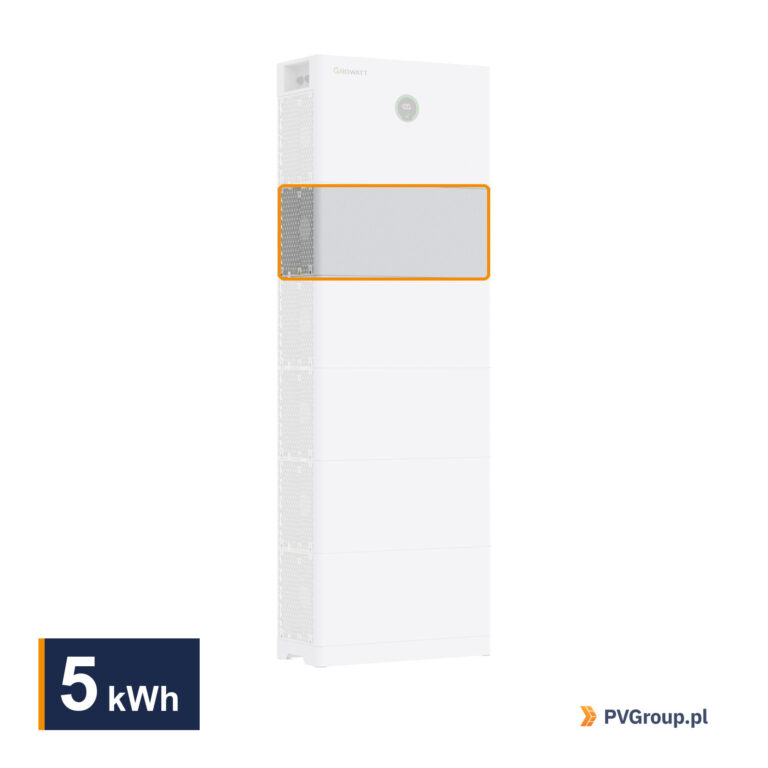
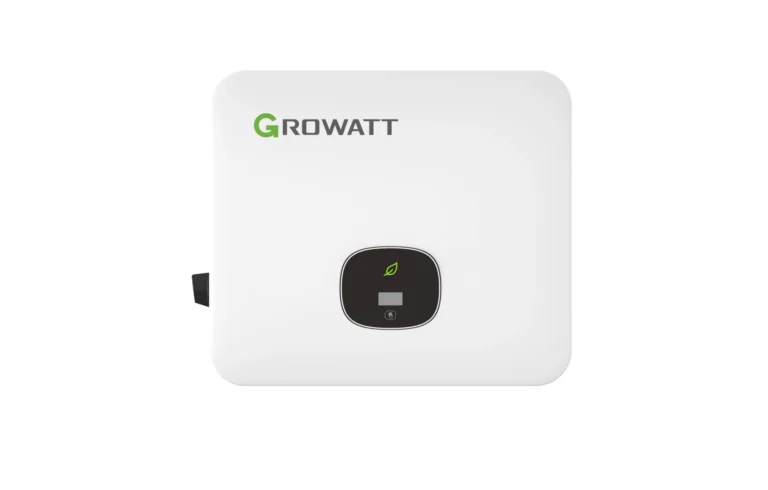
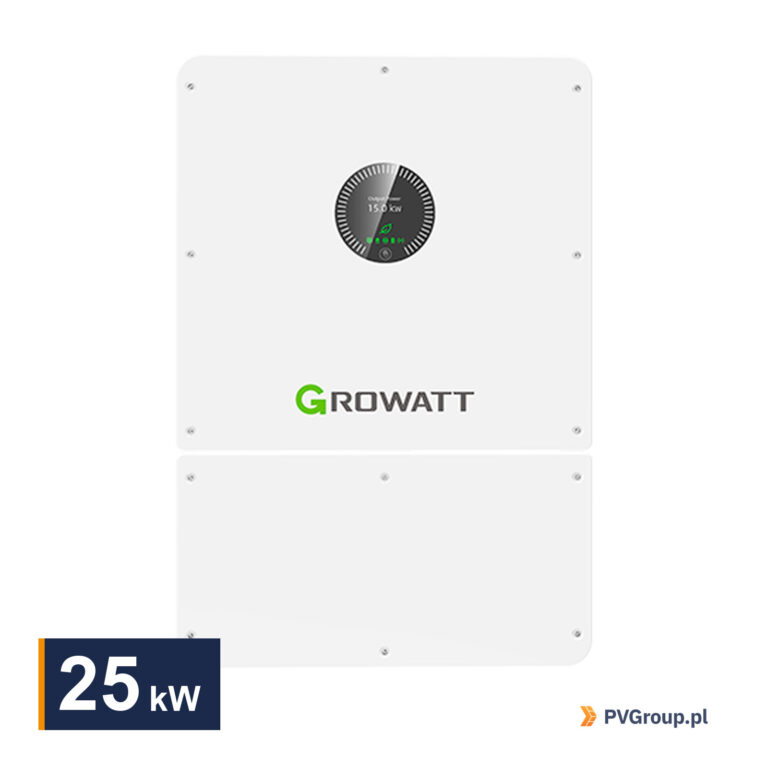
Growatt APX is a modular high-voltage battery that supports three different inverter lines in home installations—which is why it's often misordered. The modules look identical, but the system variant (S0, S1/S2, or the new generation with a Master module) determines the voltages, the power module, and what the whole thing will communicate with. This guide organizes the system structure, variants, and a principle that most first-time offers forget: APX Power increases with capacity, so a small bank can throttle a large inverter. All numbers come from the catalog data sheets of the individual variants.
What is Growatt APX and how is it constructed?
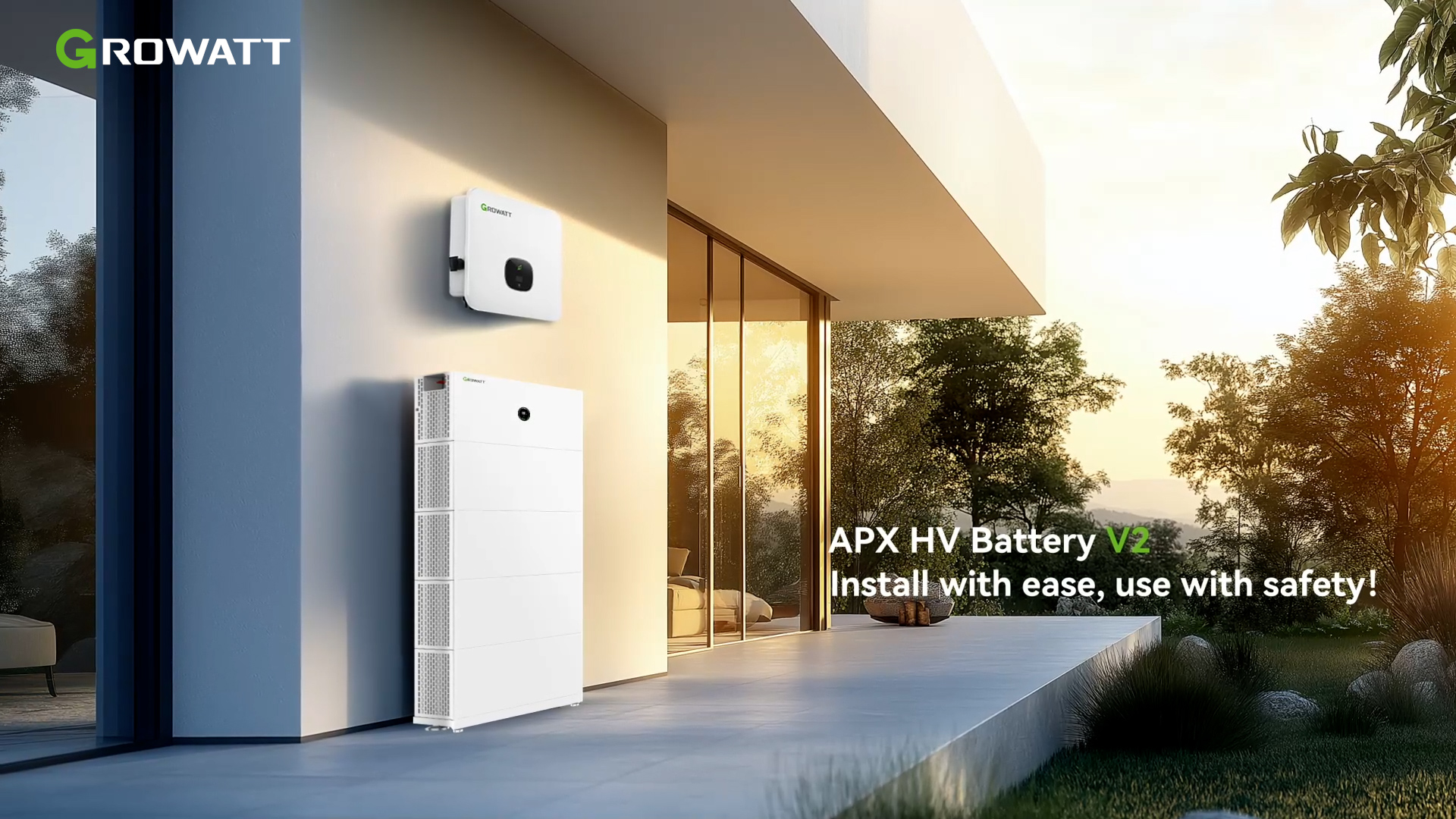
The basic building block is the battery module 5 kWh with LiFePO4 cells without cobalt - in classic variants this APX 5.0P-B1 with a nominal voltage of 385 V, an operating range of 330–450 V and a weight of 50 kg. The modules are arranged in a tower of 1 to 6 pieces, which gives system configurations from 5 to 30 kWh (APX 5.0P to APX 30.0P). The tower is crowned by a power module specific to the inverter line—and it is this power module, not the battery modules, that defines the system variant. The entire unit operates in an IP66 enclosure, with natural cooling, wall or floor mounting, and a 10-year warranty, according to the data sheets.
In the new generation, the architecture goes a step further: the system APX The M-S3 consists of a Master module APX 5.0M-B3 (5 kWh, with built-in management layer) and extension modules APX 5.0P-B3, also in configurations 5–30 kWh. Growatt APX in this version it has a wider operating temperature range - from -20 to 55°C compared to -10 to 50°C in the previous variants - which in Polish conditions means a calmer winter in unheated rooms.
Three variants - which one for which inverter?
The system variant is determined by the inverter, never the other way around. The table summarizes the key differences according to the datasheets:
| Variant | Inverters | Power Module / Master | System voltage | Max system power |
|---|---|---|---|---|
| APX S0 (1-phase) | MIN 2500–6000TL-XH | APX 55027-P0 | 450 V nominal, 380–550 V | 6,2 kW |
| APX S1 / S2 (3-phase) | MOD TL3-XH (BP), MID KTL3-XH | APX 98020-P1 (7,5 kW) or APX 98034-P2 (15 kW) | 650 V nominal, 600–980 V | 7,5 kW (P1) / 15 kW (P2) |
| APX M-S3 (Gen 2.0) | new MOD HU line (Master with integrated BMS) | Master Degrees APX 5.0M-B3 | 1-phase: 400 V nominal, 350–550 V; 3-phase: 750 V | 10 kW (1-phase) / 15 kW (3-phase) |
Two ordering pitfalls. First, in a three-phase S1/S2 line, the same set of battery modules operates with two different power modules — APX 98020-P1 limits the system to 7,5 kW, APX 98034-P2 raises it to 15 kW - so the "battery" position APX 20 kWh"without specifying the power module is undefined. Secondly, the series has an EU and General version, and storage inverters sold in Europe only work with the EU version - the same note as for the family AXE and equally ruthless when delivered from the wrong channel.
Power increases with capacity - a table to start with when selecting
W Growatt APX The charging and discharging power limit depends on the number of modules. The S0 variant card clearly shows this: one module delivers a nominal 2,5 kW, two – 5 kW, and only from three modules the system reaches a ceiling power of 6,2 kW; peak (60 s) 4, 8 and 10 kW, respectively. In a three-phase line with a module APX 98034-P2 the maximum power increases stepwise from 2,5 kW with one module to 15 kW with six, with peaks up to 20 kW for 60 seconds.
| Modules | Capacity | S0 (MIN-XH): Max/Peak Power 60 sec | S2 (98034-P2): Max/Peak Power 60 sec |
|---|---|---|---|
| 1 | 5 kWh | 2,5 kW / 4 kW | 2,5 kW / 4 kW |
| 2 | 10 kWh | 5 kW / 8 kW | 5 kW / 8 kW |
| 3 | 15 kWh | 6,2 kW / 10 kW | 7,5 kW / 12 kW |
| 4 | 20 kWh | 6,2 kW / 10 kW | 10 kW / 16 kW |
| 5 | 25 kWh | 6,2 kW / 10 kW | 12,5 kW / 20 kW |
| 6 | 30 kWh | 6,2 kW / 10 kW | 15 kW / 20 kW |
Practical conclusion: capacity is selected not only according to the consumption profile, but also to the inverter power. Growatt APX at MID 17KTL3-XH will charge at a fraction of its capacity—the card reminds us that the power of the entire system is limited by both the inverter and the bank's capacity. If a customer expects full hybrid power, the minimum sensible configuration usually starts with three or four modules, not the cheapest starting tower.
How to choose the capacity for your home profile?
Capacity selection Growatt APX is three-stage. First, energy: daily evening and night consumption from monitoring determines the usable capacity that the bank has to cover - at DoD 90% from the card every 5 kWh module gives real 4,5 kWh available. Then power: the house's peak consumption during battery hours should not exceed the maximum power of the selected configuration from the table above, because the grid will cover the difference anyway. Finally, expansion: the tower grows to 6 modules, so starting with a smaller configuration with room for additional modules is possible. APX natural - provided that there is enough space for installation, because six-module systems in classic variants are also available in two-column construction.
Weights and dimensions can be surprising during initial installation: a complete S0 system weighs from 62 kg (one module) to 315 kg (six), and a single battery module weighs 50 kg on the installer's back. The Gen 2.0 variant is more logistically friendly in this respect – the Master weighs 51 kg, the expansion module 45 kg, and the entire tower 30 kg. kWh fits in one column with a height of 1750 mm.
Working conditions and assembly
All home-made variants Growatt APX They combine an IP66 enclosure, natural cooling, operation up to 4000 m above sea level, and 5–95% humidity. They have different temperature ranges: classic lines operate from -10 to 50°C, while the M-S3 generation operates from -20 to 55°C. Installation is either wall-mounted or floor-mounted; in a three-phase line, floor mounting requires an additional base, while wall mounting requires a dedicated bracket, and both items must be included in the order. With the wall-mounted option, the new generation card reminds us of the obvious, something often forgotten on the construction site: the wall must support the system, and the manufacturer recommends floor-mounting.
Communication with the inverter is via CAN/RS485, and the system reports a complete set of parameters BMS: SOC, cell voltages and temperatures, electronics current and temperature. Certifications include IEC 62619, IEC 62477, and IEC 62040, as well as UN 38.3 required for cell transport. Family APX It doesn't end with homes - commercial variants scale up to hundreds of kilowatt-hours (including lines 71,6–114,6 kWh and 129–200,7 kWh for C&I), but these are separate products with their own cards and a separate design process.
How to buy it in practice - sets and completion
In trade Growatt APX functions as a set per inverter line: the assembly includes battery modules, the actual power module, and mounting elements (base for floor mounting, bracket for wall mounting). This allows you to order a set—for example, 5 or 10 kWh for MIN-XH, this eliminates the risk of assembling incompatible components from three different boxes. For separate orders or expansions, we return to the rule from the beginning of this article: system variant and full power module designation in the specification, EU version confirmed in the delivery channel, and uniform module generation within the tower.
Growatt APX also tolerates the "inverter first, storage in a year" scenario well - battery-ready MIN, MOD and MID work without batteries until expanded, and the set APX The addition remains unchanged on the PV generator side. The entire retrofit process is described in a separate guide on expanding an existing installation.
From the installer's practice
- From practice: in the order, enter the system variant and the full designation of the power module (APX 55027-P0 / 98020-P1 / 98034-P2 or Master 5.0M-B3), not just the capacity — "APX 15 kWh” fits three different, incompatible pickings.
- From practice: at MID and MOD, ask the customer about the expected charging power before selecting a power module - adding power after the fact means replacing the module, not tightening a screw.
- From practice: build the offer based on the power-capacity table, not on the price per kilowatt-hour - a customer who bought 5 kWh "on trial", comes back with a complaint about slow charging, not with praise for savings.
- From practice: reserve the full height of the target tower in the boiler room already during the first assembly; adding modules to APX is only simple when there is something to add.
Frequently asked questions (FAQ)
Can I expand Growatt APX after a year?
Yes—the tower scales from 1 to 6 modules within its variant. Expansion also changes the system's power (see table), so adding more can address not only "too few kilowatt-hours" but also "charging too slowly." Stick to one variant and one generation within the tower.
Mam MIN 5000 TL-XH. How much power will the battery actually deliver?
In the S0 variant the ceiling system has a power of 6,2 kW, achieved from three modules (15 kWh); one module will output nominally 2,5 kW. The upper limit remains the charging/discharging power of the inverter itself - the system always operates at the intersection of both limits.
How is it different APX from the tower ARK 2.5H?
Philosophy of the module and pair of inverters: APX grows in steps of 5 kWh and supports MIN-XH, MOD/ linesMID-XH and MOD HU, ARK — in steps of 2,56 kWh for SPH TL3 BH-UP and MIN TL-XH. Where both families are permitted, the choice is determined by expansion granularity and kit availability – we've compiled a comparison of the magazine families in our knowledge base.
The quickest way to verify your configuration is to inverter and battery configurator GrowattFrom the retrofit offer for single-phase units: set APX 5 kWh for the MIN-XH inverter and set APX 10 kWh for MIN-XH; other configurations in the category Energy storageCatalog cards of all variants are published download center Growatt.