High voltage inverter It operates with a battery with a voltage ranging from approximately 90 V to 750 V, composed of modules connected in series to form a tower. The low-voltage inverter operates with a 51,2 V storage system, where subsequent modules are added in parallel, side by side. This single difference determines everything else: the current in the battery circuit, the cross-section of the wires, the expansion method, and the presence of a separate module. BMS and the minimum capacity required to start the system. A high-voltage inverter wins in three-phase installations with long cable runs, while a low-voltage inverter wins where starting from a low capacity, off-grid operation, and ease of service are key. Below, we show both architectures on specific device families. Growattfrom which we select systems on a daily basis.
What is the difference between a high voltage inverter and a low voltage inverter?
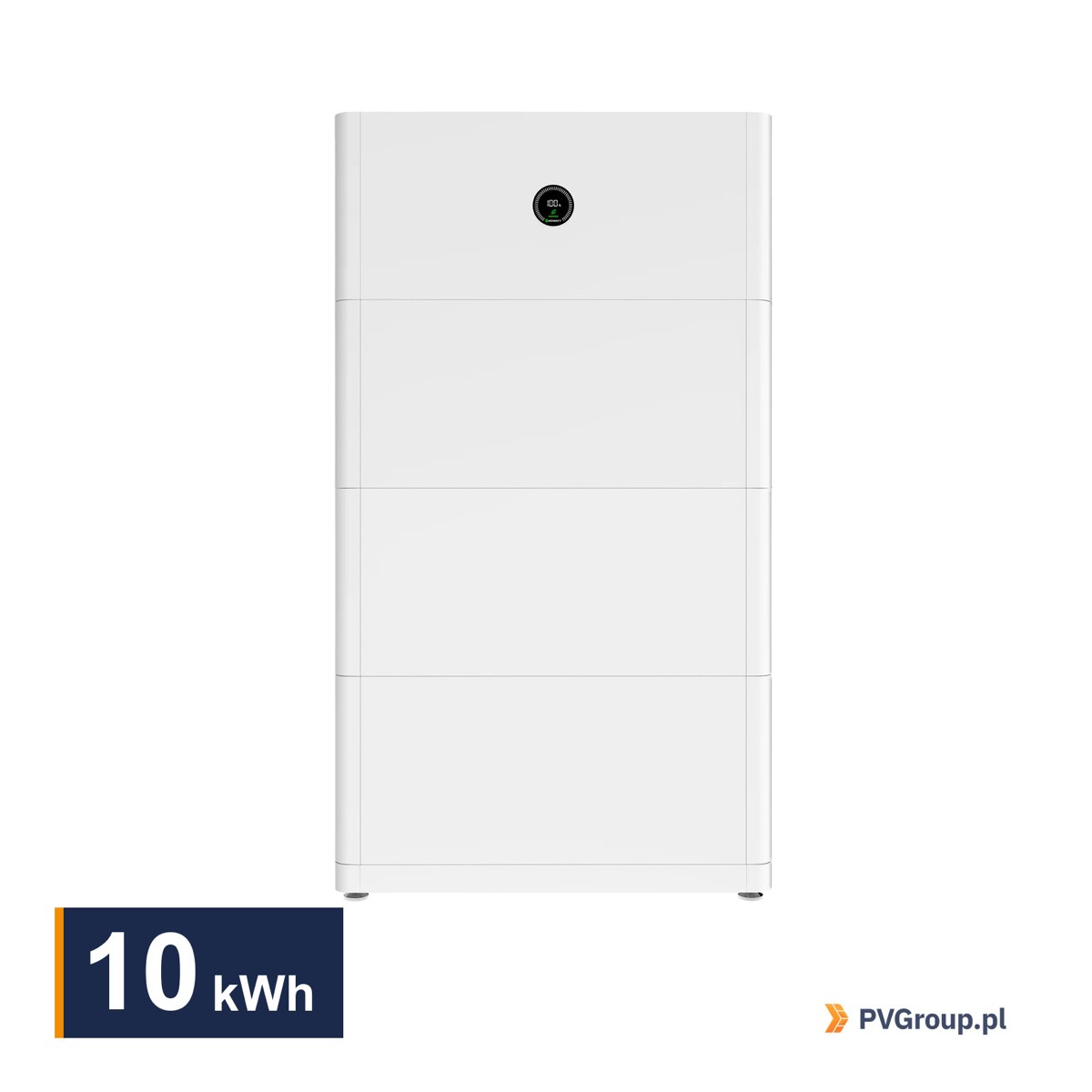
The difference isn't in the converter itself, but in the battery circuitry. High-voltage and low-voltage inverters differ in the voltage they expect from the storage—and this determines everything else. In a low-voltage system, all modules operate on a common 51,2V bus and are connected in parallel—each added module increases capacity and available current, and the battery management system resides within each module. In a high-voltage system, modules are connected in series: the voltages are added together, and a separate control module, acting as the master, oversees the entire tower. BMS.
The consequence is a completely different current range for the same power. To send 10 kW through a 51,2 V battery circuit requires a current of nearly 200 A—hence the instructions WIT A 4-15K battery cable has a recommended cross-section of 50 mm² or 120 mm². The same power at a tower voltage of 500 V requires a current of approximately 20 A, values known from AC circuits. This is a simple conversion of power to voltage, not a manufacturer's declaration. In practice, this determines cable thickness, terminal size, and cable losses, both during charging and discharging.
The second consequence is the expansion method. A low-voltage storage system expands by adding modules side by side—from a single unit to several dozen connected in parallel. A high-voltage storage system expands within a single tower and has both a minimum and maximum number of modules. If there are too few modules, the tower voltage does not reach the value at which the inverter starts operating—therefore, the HV system will not start with a single module.
Currents, cross-sections and BMS — comparison of architectures
| Characteristic | LV system (51,2V) | HV system (90-750 V) |
|---|---|---|
| Connecting modules | parallel, common rail | terraced, tower |
| Current at 10 kW | about 195 A | about 20 A at 500 V |
| Battery cables | 50-120 mm² (according to the instructions WIT) | cross-sections as in AC circuits |
| BMS | integrated in every module | separate control module above the tower |
| Start from | 1 modules | minimum by family, e.g. 3 modules |
| Development | parallel loading, up to 48 pcs. | within the tower, e.g. 1-6 modules |
| Typical use | 1-phase, off-grid, WIT-HU | 3-phase battery-ready and hybrids |
The current values in the table are a conversion of power by voltage - the exact parameters of a specific set are always verified in the battery and inverter data sheet.
The LV ecosystem in practice: SPF, SPH single-phase and WIT-HU
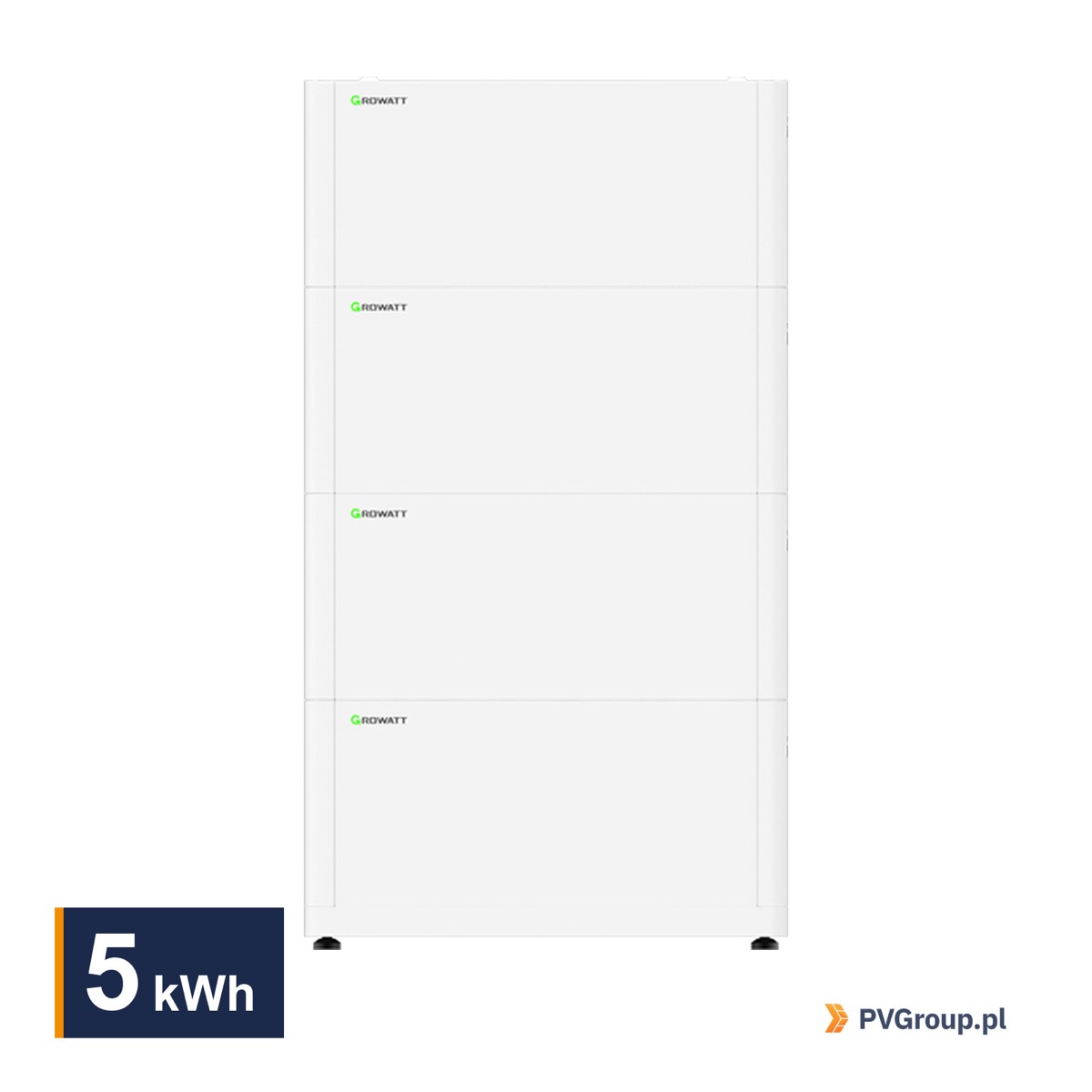
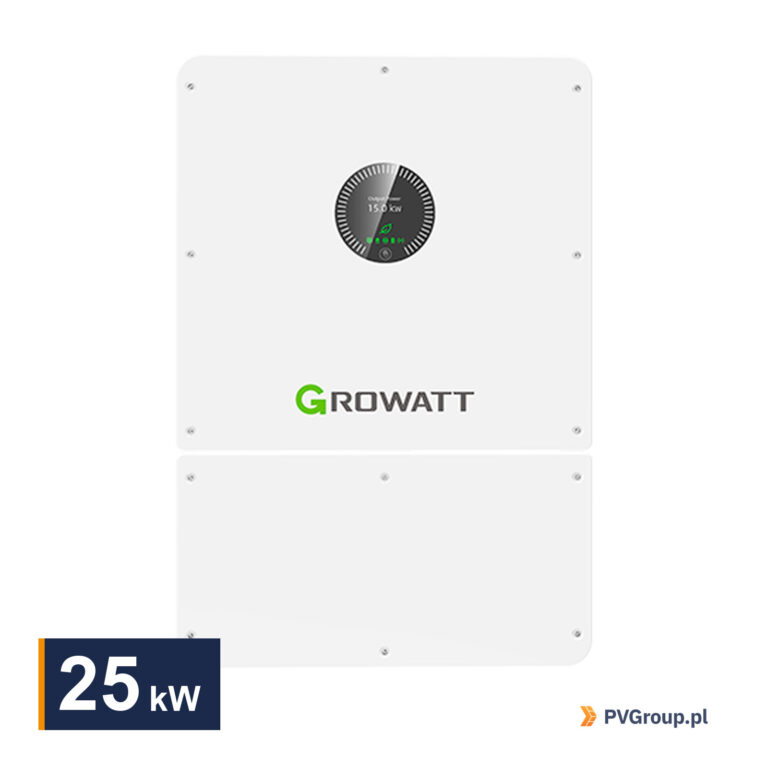
On the low voltage side Growatt has three groups of inverters: off-gridowe SPF, single-phase hybrids SPH and a three-phase series WIT-HU. They all work with 51,2 V storage, but they differ in permissible current - from 100 A in small units to 420 A in WIT 17-25K-HU.
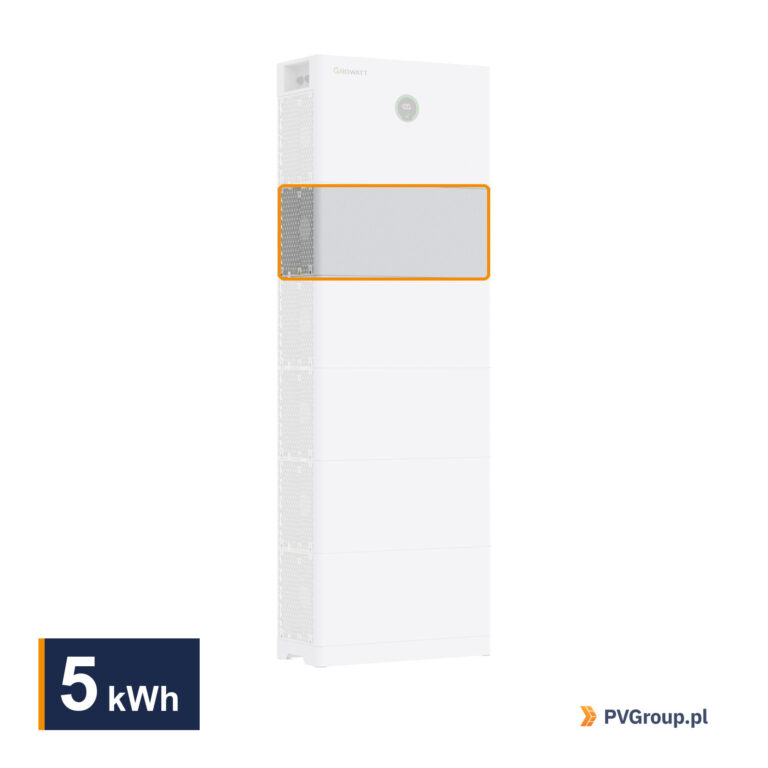
Batteries to choose from: modular AXE 5.0L-C1 and ALP 5.0L After 5 kWh, ARK 2.5L-A2 at 2,56 kWh and single-body HOPE 14.3L-A1 and HOPE 16.0LM-A1Large modules HOPE connect in parallel up to 48 pieces, which gives 686,4 kWh in 768 kWh — in a single-family home, the limit is the budget and inverter current, not the battery limit. We keep the data sheets for these modules: AXE 5.0L and HOPE 14.3L-A1.
The strength of the LV architecture is that it starts with a single module and operates in island configurations. off-grid By nature, they operate on 48V, so a low-voltage system is the only option for them. The downside is the current: at higher power levels, the wires become thick and expensive, and each connection must be made carefully, as the high-resistance contact starts to heat up at 200A.
High voltage inverter in practice: SPH TL3, MIN-XH, MOD and WIT-XHU
On the high-voltage side, each inverter family is assigned its own battery family and its own control module – and these pairings must not be mixed:
- SPH TL3 BH-UP (three-phase hybrids 4-10 kW) work with the tower ARK 2.5H-A2: from 3 to 10 modules, i.e. 7,68-25,6 kWh, under the supervision of the module HVC 60050-C2The control module operates in a voltage range of 90 to 585 V.
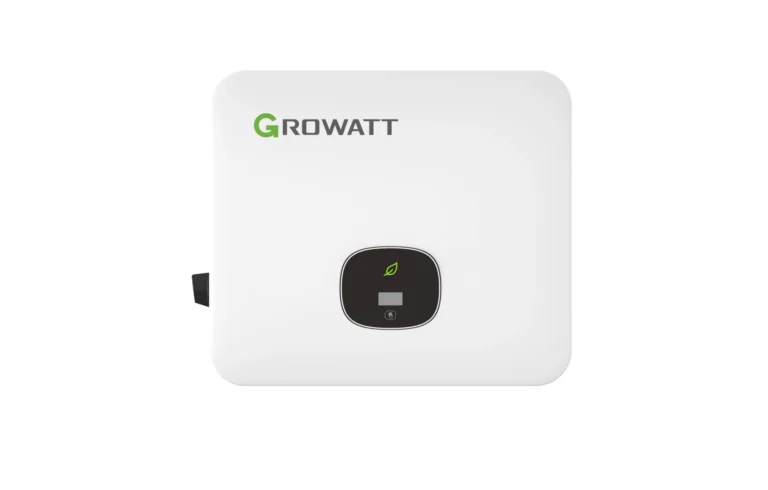
- MIN-XH and MID-XH (battery-ready 1- and 3-phase) work with the tower APX 5.0P-B1: 1-6 modules of 5 kWh, voltage up to 650 V, control module APX 98034-P2.
- MOD-HU (battery-ready three-phase second generation) use APX Gen 2.0, where the 5.0M-B3 master module itself acts as BMS, and the expansion goes with 5.0P-B3 modules up to 30 kWh.
- WIT-XHU (30-125 kW) is already industrial equipment on rack batteries AXE 5.0H-E1 in configurations 30-60 kWh.
The minimum number of modules has practical implications for pricing. A customer who wants to start with a small warehouse near the inverter SPH TL3, still has to buy three modules ARK plus a control module – entering an HV system can be more expensive upfront, even though the expansion within the tower itself is simple. The procedures for connecting the tower are described in the instructions we provide: quick guide ARK 2.5H-A2 and system manual APX.
When a High Voltage Inverter is a Better Choice
A high-voltage inverter is primarily chosen for three-phase installations with a power output of several kilowatts or more, where the storage system will operate at full capacity. Lower currents mean thinner wires, lower losses, and easier routing—especially when the battery is located in a separate room from the inverter.
The second argument is compatibility with battery-ready lines. If a customer already has a MIN-XH or MOD inverter and wants to add storage, the choice is clear—these families work exclusively with towers. APX. Similarly, three-phase SPH TL3 BH-UP by definition needs a turret ARK with module HVC; in our offer you will find both inverter SPH 10000TL3 BH-UPAnd ready-made set APX 10 kWh to MIN-XH.
The third argument is often underestimated: an HV tower takes up less floor space than the same capacity in side-by-side modules, because the entire expansion is built on a single base. In a tight boiler room, this is a real advantage.
When is a low voltage system better?
The LV architecture wins in four scenarios. The first is starting with a small capacity: one module 5 kWh is enough to get the system running, while the high voltage inverter with the tower ARK requires a minimum of three modules and a control module. The second is off-grid operation — devices off-grid SPF and island installations operate on 48V by nature. The third is very large parallel capacities: 48 modules HOPE this is a scale that no residential HV tower can achieve. Fourth, serviceability – the lack of a separate control module means one less component that can fail, and replacing a single module doesn't require disassembling the entire tower.
The price of this flexibility is current. At 51,2 V, each kilowatt of power translates to approximately 20 amps in the battery circuit, so the cable run must be short, large, and carefully crimped. Three-phase series WIT-HU shows that the LV architecture also works at 15-25 kW - but then it requires 120 mm² cables and modules with the appropriate current, as we described in inverter installation guide WIT.
High Voltage or Low Voltage Inverter - Decision Table
| Scenario | Recommendation | Why |
|---|---|---|
| 1-phase house, warehouse from 5 kWh | LV | start with one module, simple BMS |
| 3-phase house, battery-ready inverter MIN/MOD | HV | the only compatible architecture (towers APX) |
| 3-phase house, hybrid SPH TL3 | HV | tower ARK + HVC, from 7,68 kWh |
| 3-phase house, backup and high battery current | LV (WIT-HU) | up to 420 A, modules HOPE up to 48 pcs. |
| Installation off-grid / island | LV | 48V devices by nature |
| Long inverter-battery route | HV | current ~10x lower, lower losses |
| Very large capacity (100+ kWh) | LV parallel or HV rack | HOPE to 686 kWh or AXE 5.0H in rack |
From the installer's practice
First the inverter, then the battery—never the other way around. Storage architecture is driven by the inverter family, not preference. A common mistake is promising a customer a specific battery before determining whether their inverter is a high-voltage or 51,2V system.
In an HV system, consider the entry cost, not the cost per kilowatt-hour. A high-voltage inverter requires a tower with a control module and a minimal number of modules, which means a small HV storage unit can cost as much as a medium-sized LV. The equation reverses for larger capacities: the control electronics are purchased once, and subsequent tower stages are simply the cost of the modules themselves.
In practice, we often encounter attempts to combine HV modules of different families because "they are all Growatt"The Tower APX, tower ARK and rack AXE these are three separate, incompatible systems with different control modules - a mistake at the ordering stage means the return of the entire shipment.
With LV, monitor the quality of your connections more than anything else. A current of 200 A is much less forgiving than a 20 A HV tower. The torque specified in the manual, equal wire lengths between modules, and measuring voltage drops at the receiving end are the minimum requirements.
FAQ
Is a high-voltage inverter more efficient than a low-voltage one?
Higher voltage reduces conduction losses in the battery circuit because less current flows for the same power.witHowever, the efficiency of the system is determined by more factors – the design of the converter, the operating point, the length of the route – which is why we always compare specific models based on data sheets, not the architecture itself.
Can I connect an LV battery to an HV inverter?
No. The battery input voltage ranges don't overlap: a high-voltage inverter expects a tower with hundreds of volts, but a 51,2V module will never reach that. Selection always starts with the inverter family.
What capacity does the HV warehouse start from?
Depending on the family: tower ARK 2.5H-A2 requires a minimum of 3 modules, or 7,68 kWh, APX 5.0P-B1 starts with one module 5 kWhEach tower comes with a control module.
Which system is easier to expand after many years?
LV - modules are added in parallel, up to the inverter current limit and the number of pieces on the card. In HV, expansion is simple within the tower, but ends at its maximum number of modules, e.g. 6 with APX or 10 at ARK.
How to choose - five steps
- Determine the inverter family. If the facility is using a high-voltage, battery-ready inverter, the storage architecture is already decided, and the choice comes down to the right tower.
- Calculate the power the storage system will realistically deliver. In an LV system, check whether the permissible battery current will support it; in an HV system, check whether the planned tower is within the inverter voltage range.
- Check launch and target capacity: minimum HV tower versus single LV module.
- Measure the path between the inverter and the battery. The longer the cable, the more cost-effective the higher voltage, as a thinner cable along the entire path significantly costs less.
- Verify completion: control module, base, cables - HV tower without BMS won't move.
We have both ecosystems – high voltage towers and 51,2 V modules – in energy storage department, and the configuration of the operating modes with dynamic tariff is described in article about Smart Scheduling. You can also find the manufacturer's source materials in download center Growatt, and the selection of a complete set for a specific project will be performed by the team PVGroup.pl.