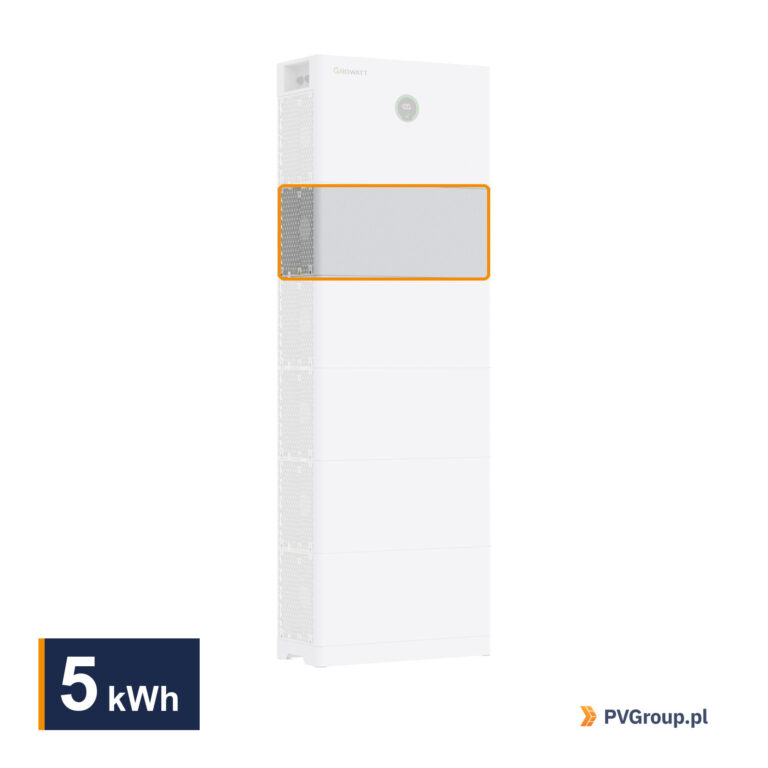
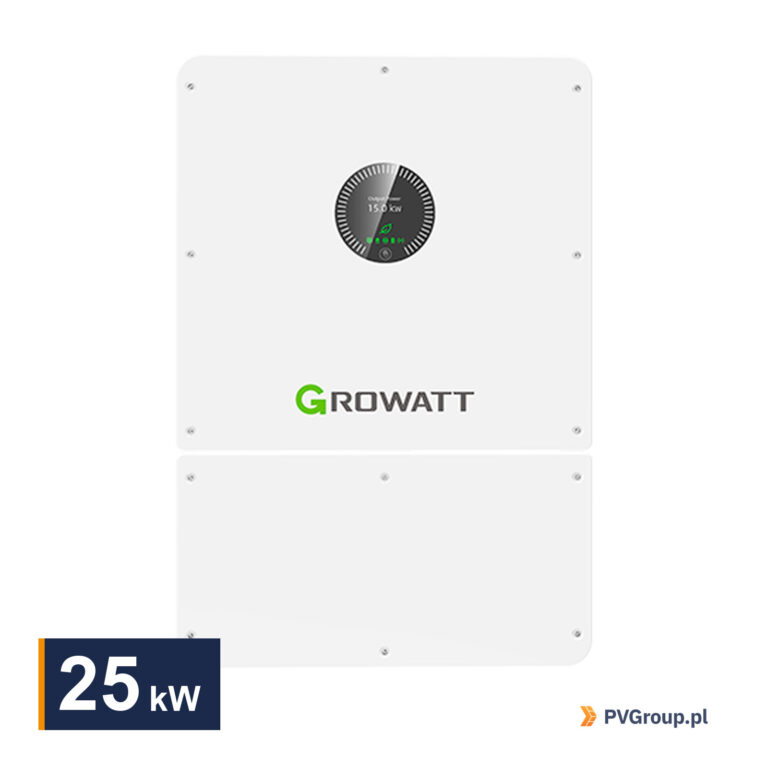
Hybrid inverter Growatt for home and small business today there is a choice between three families: single-phase MIN-XH2, three-phase SPH TL3 BH-UP and the new three-phase MOD HU line. All three store energy, all three support selected circuits during a power outage—yet they are almost never interchangeable, differing in phase number, battery class and family, and backup power delivery method. This comparison compiles parameters from our compatibility table (verified with datasheets) and shows where the line between the families lies for installations from 3 to 15 kW.
Three families in one table
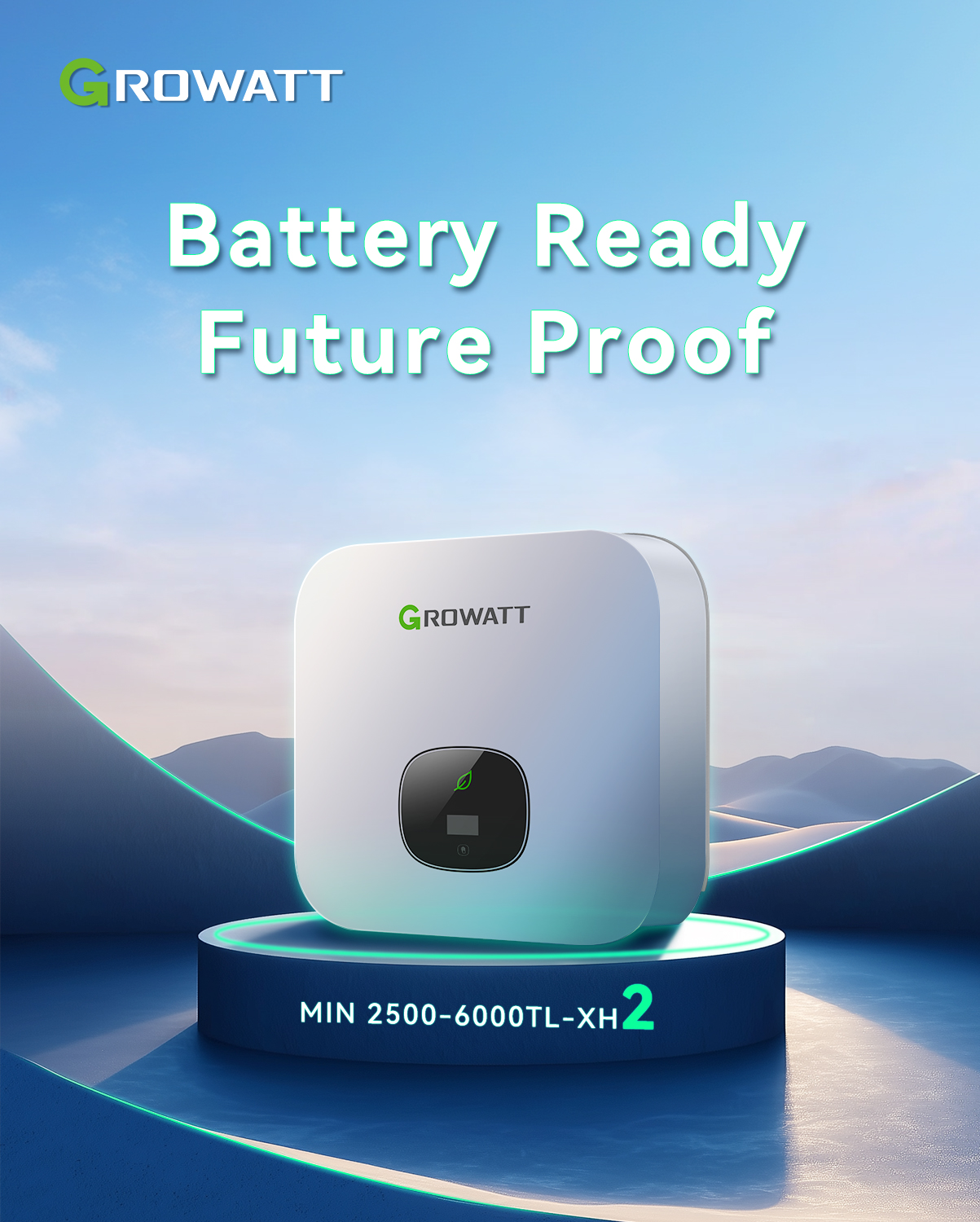
Hybrid inverter Growatt comes in three families with different architecture - the list below answers most of the selection questions:
| Family | Fazy | young man | MPPT | Battery (HV class) | BMS / emergency power supply | IP | Warranty |
|---|---|---|---|---|---|---|---|
| MIN TL-XH2 | 1 | 2,5-6kW | 2 | ARK 2.5H-A2 or APX HV | BDC 95045-A1 (ARK) / APX55027-P0 (APX); backup: SYN 50-XH-10 | IP65K | 10 years |
| SPH TL3 BH-UP | 3 | 4-10kW | 2 | ARK 2.5H-A2 (7,68–25,6 kWh) | HVC 60050-C2; UPS function as standard | IP65K | 10 years |
| MOD HU | 3 | 3-15kW | 2–3 (from 10 kW: 3) | APX Gen 2.0 (5.0M-B3 + 5.0P-B3) | Master module with integrated BMS i SYN | IP65 / IP66 (upper powers) | 10 years |
The lines deliberately describe families, not individual models – within each family, the logic is common, but the power outputs vary. For completeness: there is still a gap between the MOD HU and the 17–30 kW class. MID KTL3-XH with battery APX 5.0P-B1 and EU box SYN-100-XH-30, but these are powers above the range of this comparison.
For the sake of clarity, let's add where these families stand in relation to the rest of the catalog: below them there are microinverters and network units without a battery track (MIC, MAX — expansion with a warehouse requires a change in architecture, which we described in the retrofit guide), and above — MID 17–30 kW and industrial WIT, which we compare in separate knowledge base materials. However, the 3–15 kW range from this article covers the vast majority of home quote requests.
How to Read Signs - The Suffix Says It All
Family nomenclature can be the first barrier, so let's decipher it once and for all. In our compatibility table, the MIN-XH2 is listed as "battery-ready"—an inverter ready for a battery after purchasing a module. BMS. SPH TL3 BH-UP is a "hybrid" with UPS" - a hybrid with an emergency power supply function as standard. MOD HU is described as "battery-ready with EPS" - battery-ready unit with emergency exit provided by integrated SYN in the system APX Gen 2.0. These three labels are effectively three different answers to the question "what else do I need to buy?": module BMS i SYN (MIN), nothing (SPH), battery system with complete architecture (MOD HU).
The suffix also carries the generation: XH2 is a newer version of the single-phase XH line with the same battery pairs, and HU distinguishes the new MOD architecture from the older XH and XH BP variants, which work with a different variant APXHybrid inverter Growatt bought "by name without suffix" is a lottery of completion - hence our insistence on full markings in each offer.
Phases resolve first - and eliminate most
Single-phase hybrid inverter Growatt it's only MIN-XH2: six powers from 2,5 to 6 kW, two trackers MPPT, working with the tower ARK HV or with system APX S0. This is a natural choice for homes with single-phase connections and smaller roofs – with one practical caveat: the power fed into the grid on a single phase is subject to connection limits, so the upper power ratings of a family make sense mainly for high self-consumption with storage.
Three-phase hybrid inverter Growatt it's a choice between SPH TL3 BH-UP and MOD HU. Both families are three-phase and both go low with power (SPH from 4 kW, MOD HU from 3 kW), so in the 4–10 kW range they actually compete with each other - and here the criteria from the following sections are decisive: battery family, backup architecture and number of trackers.
Battery: ARK APX — two philosophies of expansion
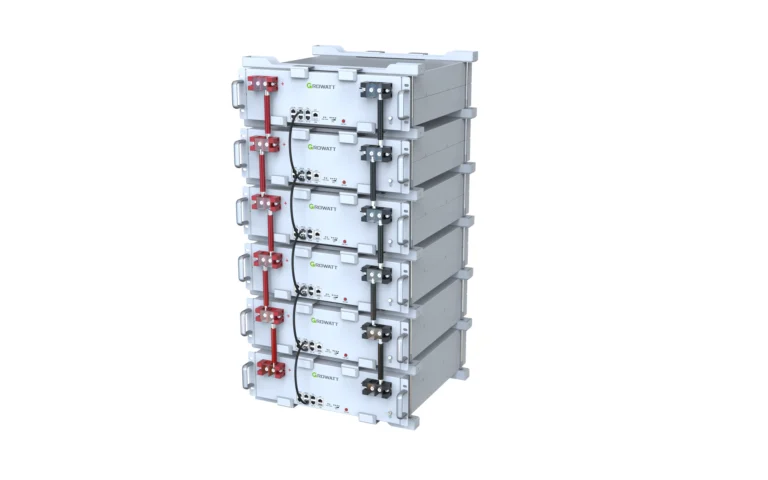
SPH TL3 BH-UP works with turret ARK 2.5H-A2 via controller HVC 60050-C2: 2,56 modules kWh, configurations from 7,68 to 25,6 kWh, expansion by one module. MOD HU works with APX Gen 2.0: Master module plus 5 expansion modules kWh, configurations 5–30 kWh, BMS integrated in the Master module. The MIN-XH2 is the most flexible - it accepts both battery families, each via its own module BMS.
The philosophy of development is sometimes more important than strict price ranges. ARK scales finer (step 2,56) kWh), so it's easier to fit the capacity into your budget; APX scales coarser (step 5 kWh), but it increases the system's power and completes the architecture with fewer elements, because the management layer and the emergency function are located in the Master module. Details of both families—with power-capacity tables—are described in separate articles about the battery. APX and about the ARK series.
Emergency power supply: standard UPS vs. included module
This is where the most frequently overlooked border runs. SPH The TL3 BH-UP is classified as a "hybrid" in our table with UPS" - the backup function is standard, without additional boxes. MOD HU provides emergency power supply through SYN integrated in architecture APX Gen 2.0 - also available without separate purchase, but as part of the battery system. The MIN-XH2, however, requires a separate box for emergency operation. SYN 50-XH-10 - Hybrid Inverter Growatt this family without SYN-a stores energy, but when the grid fails, it goes out along with it.
In the customer offer, this translates into one mandatory question: "Should the house be operational during a blackout?" If so, SPH and MOD HU have the answer in the price of the set, and with the MIN-XH2 the box SYN must be included in the quote immediately. Adding it after the first network outage is a classic second visit, which we wrote about in our guide on expanding the installation.
MPPT and the roof: when a third tracker makes a difference
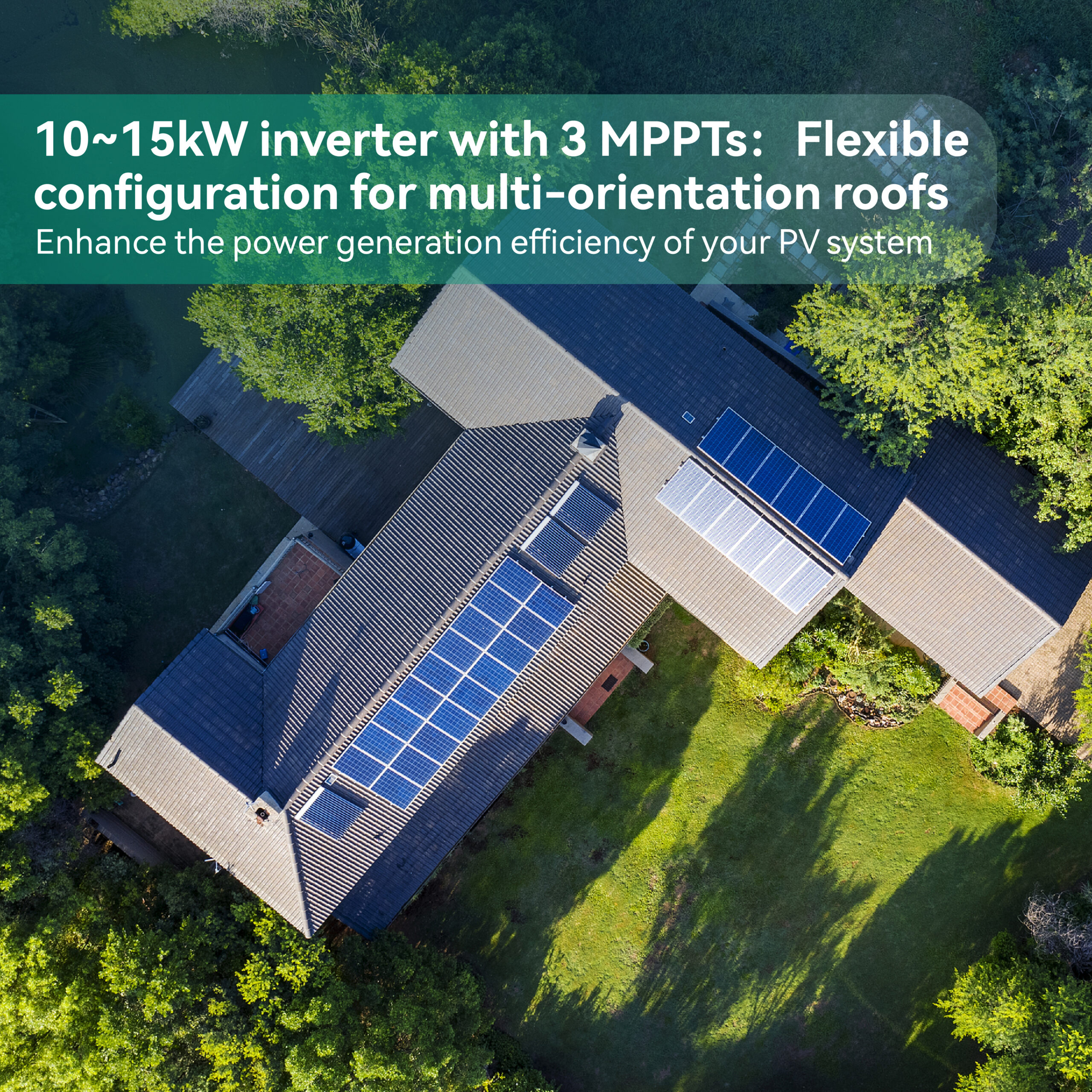
MIN-XH2 and SPH TL3 BH-UP have two trackers MPPT — sufficient for a typical gable roof. MOD HU from 10 kW and above provides three trackers, which, in multi-slope roofs, dormers, or garage sections, allows for the separation of differently operating strings without any misalignment losses. If the design has three orientations with significantly different profiles, the third MPPT can be a decisive argument faster than any power table.
From the environmental perspective, each hybrid inverter Growatt In comparison, it's consistent with the rest: IP65 in most models, with IP66 in the upper MOD HU power range. The warranty, according to the compatibility table, is 10 years in all three families - as always, confirm the specific delivery terms when ordering.
Three quick selection scenarios
1-phase house, gable roof, budget expansion with a warehouse in a year: MIN-XH2 with the power selected for the connection, with the ARK decision/APX set aside for expansion - this is the only family that leaves both paths open. 3-phase house with heat pump and backup requirement: SPH TL3 BH-UP - Standard UPS and minor tower scalability ARK for increasing consumption. New 3-phase house, multi-slope roof, target 12–15 kW: MOD HU – three trackers, power up to 15 kW and the simplest warehouse architecture included.
Each hybrid inverter Growatt This comparison is linked by the same system principle: the charging and discharging power is limited by the weaker link of the inverter-battery pair, so the selection always ends with the power-capacity table of the selected battery family, not with the inverter power itself.
What this comparison does not resolve
Fair limit: we compiled the system architecture, not the full datasheets. The PV string parameters (starting voltages, ranges) were left out of the table. MPPT, input currents), efficiency, and prices—you can compare the former in the cards linked in the download center, the latter change more frequently than any other item. We also do not determine the stock availability of specific power ratings, as this information is from the day of ordering. Hybrid inverter Growatt Treat the selection made according to this text as a short list of two candidates - the last pair is always verified by a catalog card of the appropriate power and a conversation with an advisor who knows the current status.
From the installer's practice
- From practice: start the conversation with the connection and bill, not the model - the number of phases and the consumption profile eliminate two-thirds of the catalog before any name is mentioned.
- From practice: at SPH and MOD HU compare the prices of sets with batteries, not just inverters - the differences in unit prices become blurred after adding the warehouse and system modules.
- From practice: in houses with a planned heat pump, calculate the hybrid power for future consumption, not current consumption - replacing the inverter in two years costs more than one degree of power today.
- From practice: the full model designation in the offer (with the suffix XH2 / BH-UP / HU) eliminates misunderstandings - "MOD" without the suffix means three different battery architectures.
Frequently asked questions (FAQ)
Is the hybrid inverter Growatt can it work without batteries?
The battery-ready families (MIN-XH2, MOD HU) work as a regular grid inverter until expanded with a storage unit – this is their design scenario. SPH is a hybrid by definition and only makes sense with the ARK tower; confirm the formal operating conditions without a bank in the documentation of the specific model.
Which of the three should I choose for an installation of exactly 10 kW?
At 10 kW they meet SPH 10000TL3 BH-UP and MOD 10kTL3-XH HU. Soft criteria are decisive: battery family (minor expansion ARK versus higher power and simpler architecture APX Gen 2.0), number of trackers (2 vs. 3), and kit availability. You can calculate both variants in the configurator linked below.
Can I transfer the battery between families when replacing the inverter?
Only within the limits of the compatibility matrix: tower ARK 2.5H-A2 works and SPH TL3 BH-UP, and MIN TL-XH - but via a different module BMS, the replacement of which is included in the cost of the operation. Systems APX are related to the variant (S0/S1-S2/Gen 2.0), so treat migrations between inverter lines as a separate project to be confirmed by the technical department.
The fastest way to verify the inverter + battery configuration is configurator GrowattRepresentatives of three families on offer: GROWATT MIN 5000-XH2 (1-phase battery-ready), GROWATT SPH 10000TL3 BH-UP (3-phase hybrid with UPS) and GROWATT MOD 15KTL3-HU (3 phases, 3 MPPT, APX Gen 2.0); the full list can be found in the 3-phase hybrid inverters category in the store. Data sheets are published by download center Growatt.