LV vs HV battery is in the ecosystem Growatt divided into two non-interchangeable voltage classes. The LV (low voltage) battery operates at a nominal voltage of 51,2 V and is fed to inverters off-grid, single-phase hybrids SPH and WIT HU up to 25 kW. The HV (high voltage) battery builds a system with a voltage from 90 to even 750 V and works with the MIN-XH, MOD series, MID, three-phase SPH BH-UP and commercial WITYou don't choose based on price or capacity—the specific inverter model dictates the class. In this guide, we explain the difference between LV and HV batteries, how to identify the class based on the model number, and why a mistake can result in a loss of communication with the inverter.
LV vs HV Battery: What Exactly Do These Classes Mean?
The LV battery is a storage system whose entire cluster operates at a nominal voltage of 51,2 V—regardless of the number of modules, because subsequent units are connected in parallel. This class is available in Growatt belong AXE 5.0L-C1, ALP 5.0L-E2, ARK 2.5L-A2 and family HOPE: 5.0L-B1, 14.3L-A1 and 16LM. Devices off-grid series SPF and SPE operate with this class on a 48 V bus.
An HV battery is a storage system where modules are connected in series to form a stack with a voltage of hundreds of volts. The battery controller ARK 2.5H operates in a window from 90 to 585 V, the system APX 5.0P-B1 in a three-phase installation reaches 650 V, generation APX Gen 2.0 - 400V single phase and 750V three phase, and commercial cabinet ACE 209H-2H operates at 748,8 V. Racks also belong to this class AXE HV for inverters WIT XHU.
Both classes share the same cell chemistry: all the batteries mentioned Growatt is LiFePO4. They differ in voltage architecture - and this determines the selection.
The battery class is dictated by the inverter, not by preference.
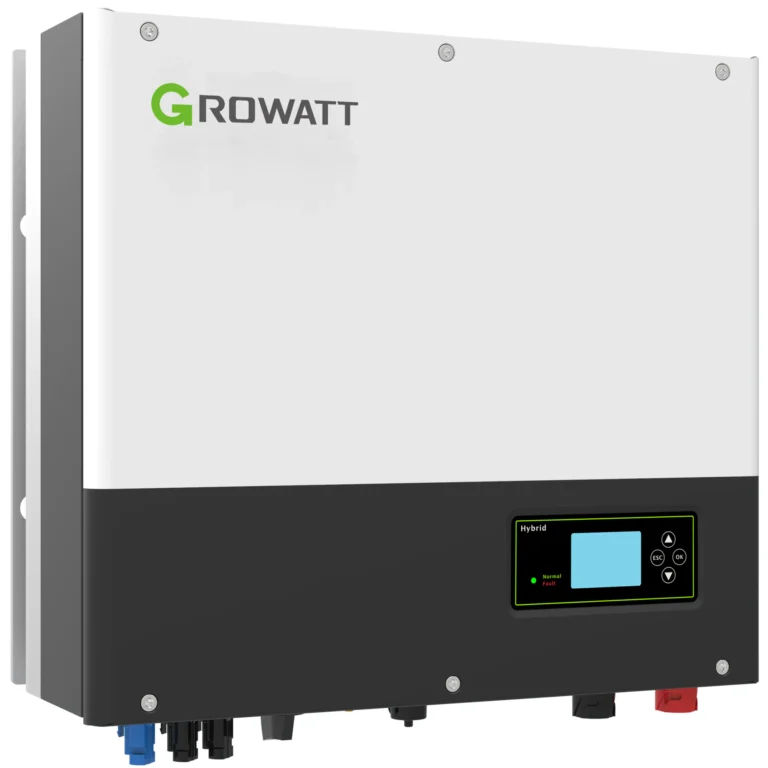
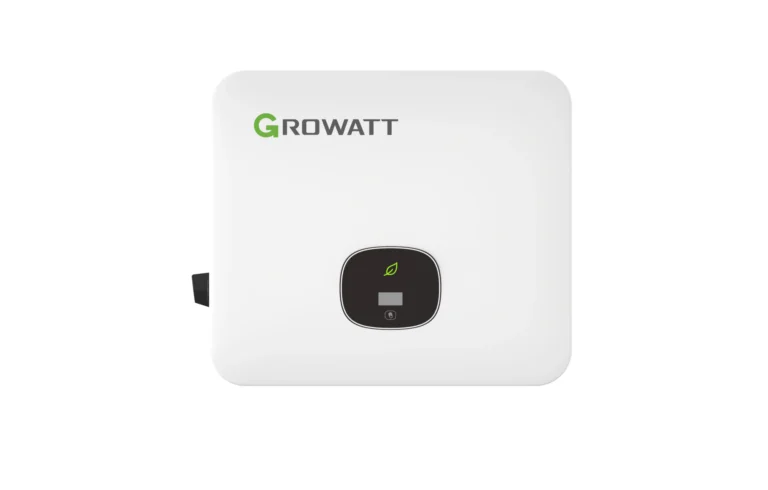
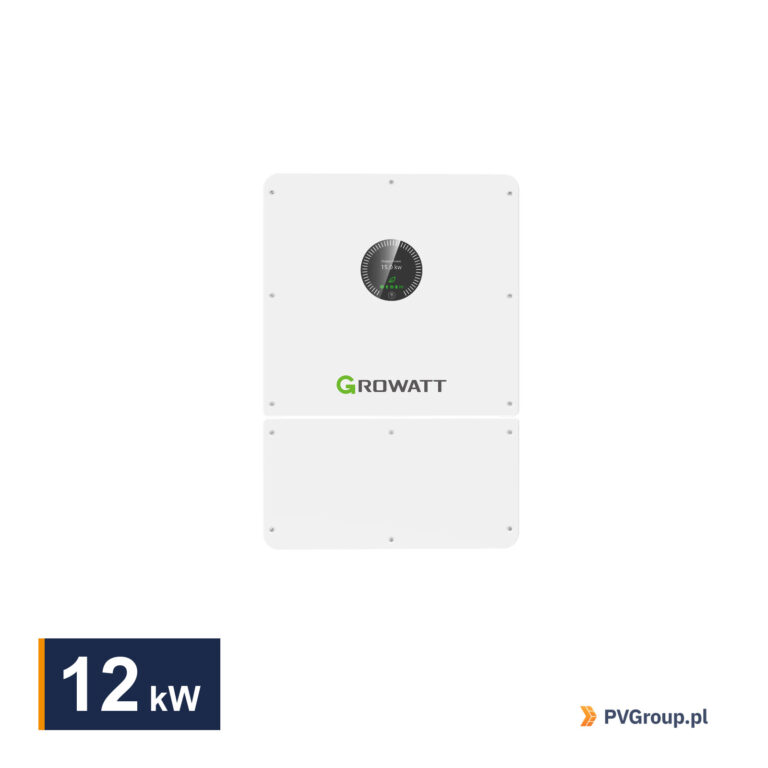
Battery circuit of each inverter Growatt is designed for a single voltage range. Therefore, the question of "which class to choose" comes down to "what inverter do you have?" The breakdown of the offering is as follows: low-voltage batteries accept devices off-grid SPF and SPE, single-phase hybrids SPH 8000TL-HU and SPH 10000TL-HU and three-phase WIT from 4 to 25 kW. High-voltage batteries support single-phase MIN-XH, three-phase SPH TL3 BH-UP, MOD series and MID, and in the commercial segment WIT 50–100K-HU and WIT XHU.
If you're just planning the entire system and still have some architecture to choose from, we've covered the differences between inverters separately in our article " High-Voltage vs. Low-Voltage Inverter ." Here, we're assuming a more common scenario: the inverter is already selected or hanging on the wall, and you're choosing a storage unit to go with it.
The source of truth about the permissible class is always the catalog card and compatibility list for a specific inverter model, not the general series name. Growatt can change the class within one line - the best example is WIT, which up to 25 kW works with LV batteries, and from 50 kW and above only with HV.
LV vs HV Battery Comparison Chart
Summary of the most important differences based on catalog cards Growatt:
| Characteristic | LV battery | HV battery |
|---|---|---|
| Working voltage | 51,2 V nominal (off-grid: 48V bus) | from 90–585 V (ARK 2.5H) to 650–750 V (APX), ACE: 748,8 V |
| Connecting modules | parallel - constant voltage, capacity increases | serial - stack voltage increases with the number of modules |
| models Growatt | AXE 5.0L-C1, ALP 5.0L-E2, ARK 2.5L-A2, HOPE 5.0L-B1 / 14.3L-A1 / 16LM | ARK 2.5H-A2, APX 5.0P-B1, APX 5.0M-B3 + 5.0P-B3, AXE 5.0H (rack), ACE 209H-2H |
| Inverters | SPF / SPE, SPH 8000/10000TL-HU (1F), WIT 4–25K-HU | MIN-XH, SPH TL3 BH-UP, MOD-XH BP, MOD-HU, MID-XH, WIT 50–100K-HU, WIT XHU |
| Minimal configuration | from 1 module (e.g. ARK 2.5L-A2: 2,56 kWh) | depending on the family: ARK 2.5H-A2 from 3 modules (7,68 kWh), APX from 1 module (5 kWh) |
| Maximum expansion | AXE 5.0L-C1: up to 400 kWh; HOPE 14.3L-A1: up to 686 kWh | Sun: ARK to 25,6 kWh, APX to 30 kWh; industry: ACE to 209,6 kWh on the wardrobe |
| Driver / BMS | integrated in the battery (AXE, ALP: CAN communication) | a separate module selected for the inverter: HVC 60050-C2, BDC 95045-A1, APX55027-P0, APX 98034-P2 |
Why LV and HV classes cannot be mixed
In the LV vs. HV battery comparison, there is no intermediate or hybrid option. The voltage windows of both classes do not overlap: 51,2 V on the low-voltage side versus a minimum of 90 V at the controller input. ARK 2.5H on the high-voltage side. A battery-powered inverter designed for one window will not physically support another. There is also no adapter or service mode that would bypass this limit—selection is made solely within the class assigned to the inverter.
The second barrier is communication. A high-voltage battery requires a controller. BMS compatible with both the battery family and the inverter: HVC 60050-C2 for three-phase SPH, BDC 95045-A1 for MIN-XH with battery ARK HV, APX55027-P0 for MIN-XH with APX, APX 98034-P2 for MOD-XH and MID-XH. A bad controller means no communication between the battery and inverter at startup - even if the voltages formally match.
How capacity scales across both classes
The low voltage battery scales widely because parallel connection does not change the voltage. ARK 2.5L-A2 increases from 2,56 to 25,6 kWh in a cluster of up to 10 modules. AXE 5.0L-C1 builds clusters of 1-10 modules and with 8 clusters it reaches up to 400 kWh. HOPE 14.3L-A1 scales to 686 kWh with 48 units. An example of a ready-made set with this logic is energy storage AXE 30 kWh.
The high-voltage battery in the home segment has narrower forks, but is precisely matched to the inverters: ARK 2.5H-A2 works in a stack of 3 to 10 modules (7,68–25,6 kWh), and families APX — from 5 to 30 kWhFor three-phase SPH a convenient starting point is battery pack ARK 15 kWh for SPH inverter.In industry, the scale is turning: the wardrobe ACE 209H-2H holds 13 modules and 209,6 kWh total capacitywityea, of which 188,6 kWh useful.
When LV vs HV Battery Wins in Design
If you're just choosing an inverter, it's worth considering the LV vs. HV battery comparison at the level of the entire project, not just the battery itself. The low-voltage class is best suited for situations where the customer starts with a small capacity and plans to add modules in stages—a cluster grows from a single 2,56-watt unit. kWh without changing the architecture. This is also the only way for systems off-grid SPF and SPE and for three-phase WIT up to 25 kW, where large units HOPE I 14,3 16 kWh allow you to quickly build capacity without an extensive stack.
The high voltage class wins in designs based on the MIN-XH, MOD series, MID and three-phase SPH BH-UP — because these inverters simply won't accept any other class. In practice, this also means order in the commercial segment: WIT 50–100K-HU, WIT XHU and wardrobes ACE they create a coherent high-voltage ecosystem in which capacity is planned according to the design, taking into account the consumption profile of the facility.
From the installer's practice
- You can read the class from the letter in the model designation. Growatt codes it consistently: "L" means low voltage battery (ARK 2.5L, AXE 5.0L, HOPE 5.0L), "H" - high voltage (ARK 2.5H, AXE 5.0H, ACE 209H). Couple ARK 2.5L-A2 and ARK 2.5H-A2 differs by one letter, and these are two non-interchangeable products - when ordering, verify the full designation, not just the name "ARK".
- Do not infer class from the voltage of a single module. Module ARK The 2.5H-A2 is rated at 51,2V—the same as LV batteries. The rating is determined by the stack architecture and the controller's operating window (90–585V), not the nameplate on the individual unit. From experience, this is the most common source of errors when pricing "from the nameplate."
- The minimum number of modules can be a pricing trap. In class LV, the cluster starts with one module, in the stack ARK HV - from three. Offer for three-phase SPH with one module ARK It looks cheap, but such a system cannot be run.
- Controller BMS order together with the battery, in one order. A common mistake is assembling an HV battery without a control module or with a module from a different family. Based on real-world installations, specifying the target inverter model in the order allows the supplier to detect a bad pair before shipment.
FAQ: LV vs HV battery selection practice
Will I connect an HV battery to an LV-capable inverter?
No. The voltage windows do not overlap: Class LV operates at 51,2V, and HV systems start at 90V and above. The inverter only supports the class listed in its specifications and compatibility list.
How do I know if the battery is Growatt is LV or HV?
After the letter in the model designation: "L" for low voltage class, "H" for high voltage class. Examples: AXE 5.0L-C1 and HOPE 14.3L-A1 to LV, ARK 2.5H-A2 and AXE 5.0H is HV. The datasheet for the specific model always determines the final value.
Which class allows you to build a larger warehouse?
In the home segment, the inverter sets the boundaries: HV families end at 25,6–30 kWh, and low voltage AXE i HOPE scale to several hundred kWh in parallel clusters. In industry, the highest capacities are achieved by HV cabinets — ACE 209H-2H holds 209,6 kWh in one housing.
Does an LV vs HV battery differ in lifespan or cell chemistry?
The chemistry is the same - all the batteries mentioned Growatt is LiFePO4. Datasheets do not differentiate classes in terms of lifespan; the differences relate to voltage architecture, expansion method, and required controller.
Conclusions for selection
- Start with the inverter: its compatibility list will decide the choice of LV vs HV battery before you compare any capacities.
- Verify the class letter in the full model designation - "L" and "H" in the same family are different products.
- In the HV class, count the minimum number of modules (ARK: from 3) and select the controller BMS for a pair of battery + inverter.
- When planning a major home extension, check your family's limits: ARK to 25,6 kWh, APX to 30 kWh, LV - depending on the model up to several hundred kWh.
- Check what class your inverter requires, kit configurator Growatt — the tool shows it automatically with the compatible BMS.
You will find the full offer of both classes in the category battery Growatt na PVGroup.pl, and catalog cards — in manufacturer's documentation GrowattEach warehouse in our offer is covered by a European service warranty.